
The Atlantic hurricane season officially begins on June 1 and will last through the end of November.
How the Ten Essentials Keep You Safe on Trail—and at Home
If you’ve ever taken one of my backcountry safety courses, paddled on a coastal trip with me, or dug into a trail meal clinic, you’ve heard me talk about the Ten Essentials. These are the core pieces of gear and skills that make any wilderness journey safer. But here’s the truth most people miss: your outdoor kit isn’t just for the backcountry—it’s also your first line of defense in a natural disaster.
Case in point: hurricane season.
Whether you live near the coast, inland flood zones, or even in urban areas vulnerable to infrastructure collapse, your backpacking or kayak expedition gear can become your lifeline when power goes out, roads flood, and help is hours—or days—away.
From Trail Skills to Neighborhood Resilience
Gear is only half the equation. The skills you learn through kayaking, backpacking, and backcountry cooking—situational awareness, resourcefulness, improvisation—are just as vital in disaster response.
Many of my students have used what they learned in my courses to help neighbors: clearing storm debris, distributing food, setting up impromptu shelters, even purifying water for others. That’s the real power of preparedness—it’s not just personal; it’s communal.
Let’s break down the Ten Essentials, and I’ll show you exactly how they’re just as critical in a storm shelter as they are on a ridgeline.
🧭 1. Navigation
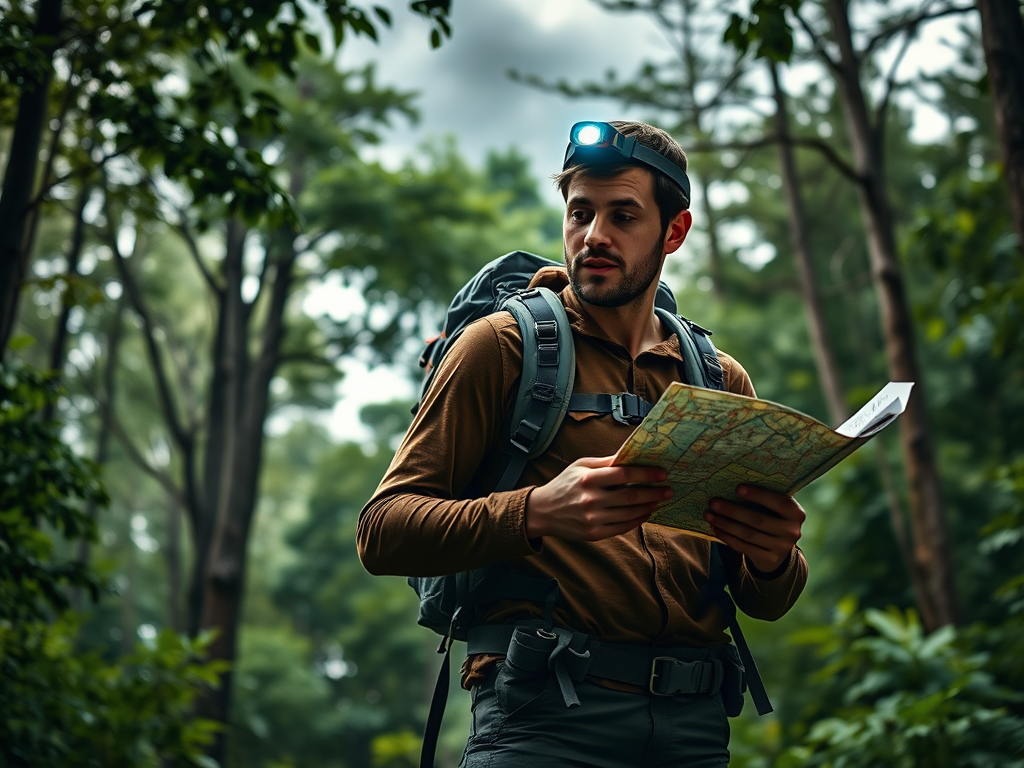
Map, compass, GPS, or downloaded offline maps—tools every backcountry traveler uses. In a hurricane, these help you reroute when roads flood, find evacuation points, or guide neighbors to safety when cell towers are down.
Jeff’s Tip: Keep a waterproof topo map of your area and a compass in your emergency kit—even if you’re not “going anywhere.”
🔥 2. Headlamp & Extra Batteries
In the wild, this keeps your hands free while navigating camp or trail at night. At home during a blackout, it’s 100x more effective than candles and safer around pets and kids.
Hands-free light is non-negotiable in both wilderness and disaster scenarios. A reliable headlamp with extra batteries ensures you can cook, navigate, or perform first aid in total darkness. It’s also essential during power outages when you need both mobility and visibility.
But your lighting strategy shouldn’t stop there. I also recommend:
- Eagle Nest Outfitters (ENO) Twilights Camp Lights: Lightweight, USB-powered string lights that are perfect for cozy, low-draw illumination in tents, shelters, or even inside the house when the grid goes down. They help conserve your headlamp batteries and boost morale.
- Goal Zero Nomad 20 Portable Solar Panel: This rugged, backpack-friendly panel keeps your headlamps, phones, GPS, and radios topped up during extended outages or expeditions. Pair it with a small power bank for nighttime charging.
- Battery-powered Emergency Weather Radio (NOAA-compatible): Essential for staying updated on weather alerts, evacuation notices, and emergency broadcasts. Get one with a flashlight and USB charging port for maximum utility.
Jeff’s Tip: I teach how to build a field-ready power system using solar panels, power banks, and low-draw LED lighting. Whether you’re in a tent, a kayak, or your home during a blackout, you’ll have the skills to keep communication and visibility going strong.
Jeff’s Tip: Practice hands-free cooking, medical aid, and shelter setup using your headlamp. You’ll be glad you did when the grid goes down.
🔪 3. Knife or Multitool
From food prep and fire-starting to cutting tarp lines or opening stubborn cans, your trail knife is a core disaster survival tool.
In the backcountry, your knife or multitool handles everything from slicing food and cutting cordage to field repairs and first aid. But during hurricane recovery, it becomes your everyday workhorse—especially when clearing debris, opening supplies, or handling minor emergencies.
For larger-scale damage—like fallen trees or blocked driveways—I recommend adding a gas-powered chainsaw to your home or vehicle kit. It’s not part of your hiking loadout, but in a disaster, it can make your backcountry mindset exponentially more effective.
Chainsaw essentials:
- Know how to safely operate, sharpen, and maintain your saw
- Keep bar oil and mixed fuel stored safely and rotated regularly
- Carry PPE (gloves, chaps, hearing protection, eye protection)
- Make sure your first aid kit includes trauma care for cuts
Pro Tip: After a hurricane, always scan carefully for downed power lines before clearing debris or walking through flooded areas. Assume all wires are live until confirmed otherwise. No saw or multitool fixes electrocution—situational awareness saves lives.
Jeff’s Tip: I teach chainsaw handling in off-grid and overland preparedness courses. Paired with a solid multitool and the right mindset, you’ll be able to clear paths, help neighbors, and manage damage without waiting for responders.
Jeff’s Tip: Learn one-handed knife use and basic tool maintenance in my field clinics—it’s a confidence booster when working in bad conditions.
🔥 4. Fire Starter
On trail, this means a lighter, ferro rod, or waterproof matches. In a hurricane aftermath? It could mean cooking outside or boiling water when utilities are compromised.
Whether you’re on the trail or facing a power outage after a hurricane, having multiple ways to start a fire is essential. Lighters, ferro rods, waterproof matches, and even homemade fire starters give you options to boil water, stay warm, and cook meals when utilities are down.
But here’s a critical safety note: never use propane or isobutane camp stoves inside your home, garage, or any poorly ventilated space. These stoves produce carbon monoxide, a colorless, odorless gas that can be deadly in enclosed areas.
Stick to these rules:
- Only cook with gas stoves outdoors or in a well-ventilated, open-air setting
- Never use a stove or flame near flammable materials, inside your tent (shelter)
- If using fire indoors (like a fireplace), ensure chimneys are clear and functional
- Keep a fire extinguisher or fire blanket accessible in your emergency cooking area
Jeff’s Tip: In my cooking and disaster-prep clinics, I cover safe cooking setups for patios, porches, and field kitchens—including alternative fuels like alcohol stoves, solid fuel tabs, and even DIY rocket stoves. It’s not just about starting a fire—it’s about knowing when, where, and how to do it safely.
Jeff’s Tip: Always keep multiple fire sources in your gear—one in your shelter kit, one in your med kit, one in your jacket.
🧤 5. Shelter
Backcountry shelter like a bivy, tarp, or emergency space blanket can save your life in a storm-damaged house, your car, or on the move.
In the backcountry, your shelter is your lifeline—whether it’s a tarp, bivy, or ultralight tent. But in a hurricane, your home becomes the first and most critical shelter, and securing it properly can make the difference between riding out the storm safely or scrambling for help afterward.
Before the storm hits, treat your home like a backcountry basecamp:
- Board up windows or install storm shutters
- Seal and sandbag doorways prone to flooding
- Reinforce garage doors and roof tie-downs if you’re in a high-wind area
- Secure or stow outdoor gear and debris that could become projectiles
- Have an interior room prepped as your “storm shelter” with padding, helmets, water, and communications
- Stash your backpacking tarp or bivy inside this room in case the roof fails or conditions worsen
- Evacuate? If you are told to go…go and take your Go Bag with the Ten Essentials. Do not wait, because you will get stuck on the road.
And always have a portable backup shelter in your go-bag—a mylar bivy, tarp kit, or even a hammock fly can get you through an unexpected evacuation, car breakdown, or neighborhood displacement.
Jeff’s Tip: I teach tarp setup techniques that work in tight spaces like garages, basements, or porches—because shelter isn’t always about comfort, but about protection, insulation, and adaptability.
🧣 6. Extra Clothing
Layering for the backcountry often includes wool or synthetic base layers. In a hurricane response zone, staying dry and warm can prevent hypothermia—even in southern states.
Jeff’s Tip: Keep a sealed dry bag with non-cotton backup clothing in your kit. It doubles as a pillow or insulation layer too.
🧂 7. Extra Food
Trail meals, energy bars, or even freeze-dried packs keep you fueled when stores are empty and roads are closed.
In the backcountry, carrying a few days of lightweight, high-calorie meals is standard. But for disaster readiness—especially during prolonged hurricane recovery—it’s smart to think bigger. I recommend building a one-month supply of nonperishable foods for each person in your household.
The good news? If you’ve already dialed in your backpacking or kayak expedition food system, you’re most of the way there. Backcountry foods are tailor-made for emergencies: they’re compact, shelf-stable, require minimal prep, and deliver serious calories when you need them.
Here’s what I include in my personal stash—both for trips and at home:
- Freeze-dried meals (Backpacker’s Pantry, Mountain House, etc.)
- Instant ramen and noodle bowls (Shin, Lotus Foods, or DIY versions)
- Dehydrated beans, rice, and lentil mixes
- Vacuum-sealed or foil-packed proteins (tuna, chicken, Spam, jerky)
- Powdered eggs and shelf-stable cheeses
- Trail mixes, dried fruit, and nut butters
- Instant oatmeal and pancake mixes (just add water)
- Electrolyte drink packets and instant coffee
Jeff’s Tip: Every item in your food kit should be something you’ve actually cooked and eaten in the field. I teach meal planning and efficient cooking systems in both expedition prep and disaster-readiness workshops—because confidence in your food makes every situation more manageable.
By rotating your trail meals through your home pantry, you stay ready without wasting food. Plus, when the power’s out and spirits are low, pulling out your favorite trail pancakes or a hot bowl of Bang Bang Chicken can lift the whole family.
Jeff’s Tip: Rotate your field food into your home supply—those banana pancake mixes I teach in class? Shelf-stable and morale-boosting.
💧 8. Extra Water & Purification
This one’s a no-brainer. Whether it’s a Sawyer filter, iodine tabs, or a boil setup—if you camp, you know how to find and treat water. This skill is invaluable when municipal water systems fail. Be ready for three weeks without potable water.
Jeff’s Tip: Teach your family how to use that water filter they saw in your kayak bag. Clean water is survival 101.
🩹 9. First Aid Kit
You don’t have to be a WFR like me to keep a dialed-in kit. Cuts, infections, burns, and minor trauma become major problems in disaster zones without access to care.
A dialed-in backcountry first aid kit can save lives on trail—and it’s just as vital when access to emergency services is delayed during a hurricane or natural disaster. Cuts, infections, burns, and minor trauma can quickly escalate without proper treatment. But first aid isn’t just about gauze and tape—it’s about medications, too.
I strongly recommend keeping at least a one-month supply of any essential prescription medications, including asthma inhalers, insulin, heart meds, antibiotics (if prescribed), or mental health meds. Pharmacies will be closed or overwhelmed for days or weeks after a disaster, and your health shouldn’t hinge on a supply chain failure.
Equally important: write down all medications, dosages, and any allergies on two laminated or waterproof notecards, and keep one on you and the other in your first aid kit. If you become incapacitated or need to seek help, this info can be life-saving for search and rescue and first responders.
Jeff’s Tip: In my WFR and preparedness courses, I teach how to build modular med kits with waterproof documentation. I also show how to improvise wound care and manage long-term issues when evacuation isn’t immediate. When you’re calm, confident, and prepared—your whole group stays safer.
☀️ 10. Skin Protection
Sunglasses, SPF, and a brimmed hat aren’t just for alpine ridges. After a hurricane, you may be outside for long stretches helping neighbors or waiting in supply lines.
It’s not just UV rays you need to worry about—mosquitoes, ticks, and biting flies can be relentless in both wilderness and post-disaster environments. Prolonged exposure without protection can lead to dehydration, heat illness, sunburn, and even vector-borne diseases like Lyme or West Nile virus.
In the backcountry, you likely already pack sunscreen, lip balm with SPF, a wide-brimmed hat, and insect repellent. These should all carry over into your home emergency kit. After a hurricane, you may be clearing debris, standing in long supply lines, or helping neighbors—all while exposed to the elements and swarms of bugs that come out after flooding.
Jeff’s Tip: I always pack a lightweight UV-protective long-sleeve shirt, a neck gaiter (shades, warms, and doubles as a dust mask), and a small bottle of Picaridin or DEET-based repellent. These items pull double duty for sun and bug protection, and I teach how to apply them effectively as part of both wilderness and disaster-readiness courses.
Final Thoughts: Outdoor Gear Is Survival Gear
If you’ve been building a solid backcountry kit for paddling or hiking, you’re already halfway to building a disaster readiness plan. But survival isn’t just about gear—it’s about skills and community. Don’t wait for disaster to think about readiness. Look at your backcountry kit and ask yourself: Could this sustain me for three weeks at home without power? Could it help me help others?
I always say: the best backcountry trips are the ones where you come home with a good story. The best disaster responses are the ones where you’re the helper—not the one needing help.
Want to learn how to cook, shelter, and care for others using gear you already own? I offer instruction in:
- Overlanding and kayak-based meal planning
- Bushcraft cooking & fuel-free food prep
- Disaster-ready first aid and water treatment
- Chopstick cooking techniques (because even in a storm, eating well matters)
Let’s make your trail kit and your home a safer place.
—
Know your kit. Know your neighbors. Know you’re ready.
– Jeff Fabiszewski
Wilderness First Responder | Expedition Guide | Backcountry Skills Educator
 Liquid Rhythm Adventures' Journal