
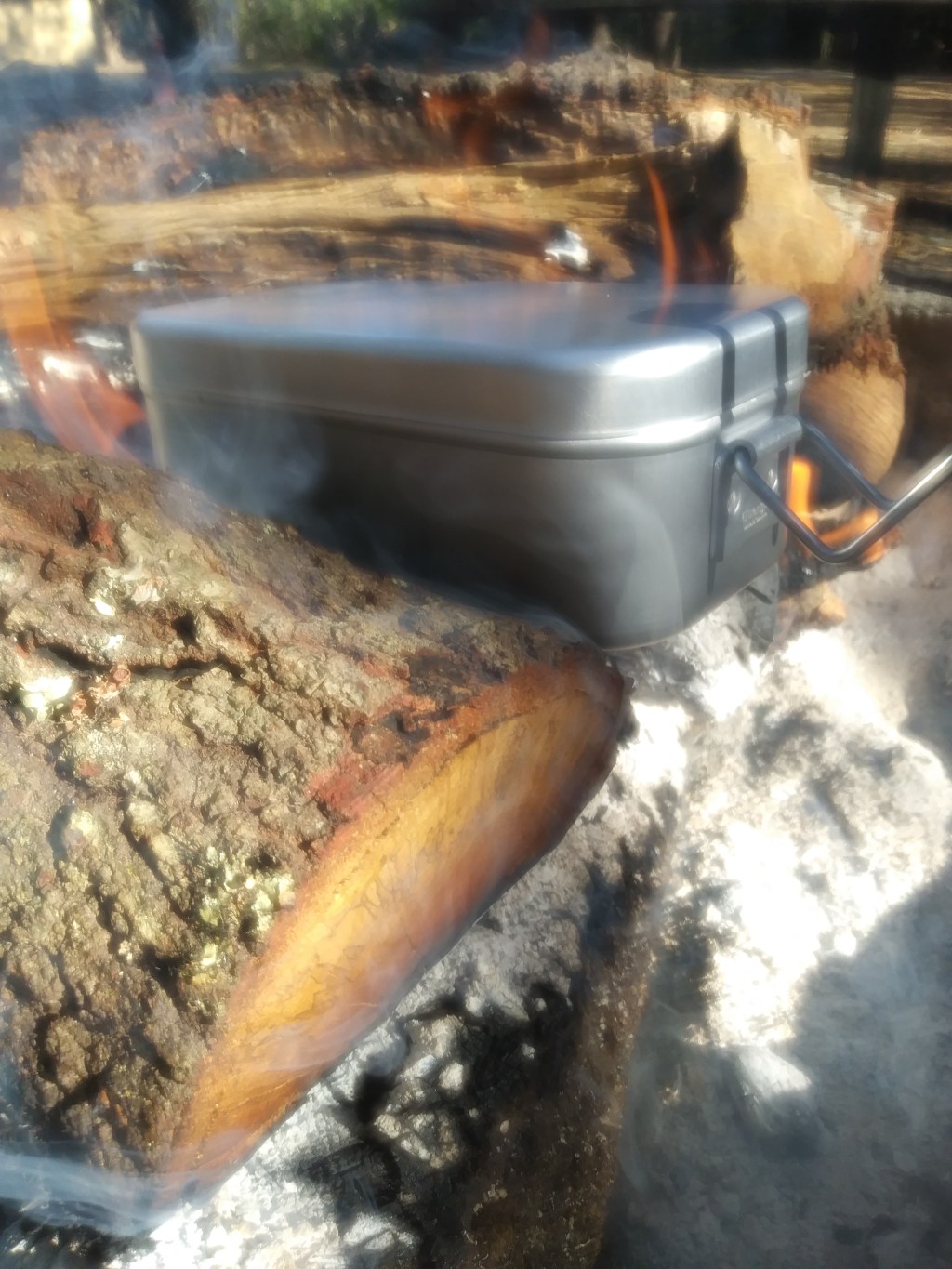
My Trangia 210 Small Mess Tin earns its place by cooking the food I actually want to eat. Ramen and rice are regular jobs, but I also use it for baked apples, shishito peppers and eggs, beans, cobbler, corn on the cob, and Mexican street corn. A small pot need not mean a small idea of supper.
My verdict: Consider it for compact camp cooking when you are willing to watch the heat. Choose something else if your priority is forgiving cookware for distracted cooking or larger portions. I own the small silver 210; this review concerns that tin.
Paid link: As an Amazon Associate I earn from qualifying purchases. Check the exact model on Amazon. Confirm the selected version, size, and seller.

The omelet that became an egg brick
I once overcooked an omelet until it became a solid, dried out egg brick. The lesson was straightforward: lower the heat and pay attention to time. In my use, this tin conducts heat efficiently. Too much heat quickly turns an ordinary meal into something fit for a masonry demonstration.
I stay with the stove and the food throughout cooking. The tin is durable, but it is not a lazy camping tool. Start with gentle heat, watch what the food is doing, and adjust. I have used mine over wood coals, a gas burner, an alcohol stove, and Esbit tablets. Each arrangement needs a suitable support and the operating clearances required by the stove instructions.
Start with the meal
For ramen, allow room for the water, noodles, additions, and stirring. For rice, use the proportions and timing appropriate to the particular rice, then practice with the stove you intend to pack. A small rectangular tin has limits; a good menu respects them.
Apples, cobbler, corn, and eggs ask different things of the cook. Before a trip, make the complete portion at home in this tin. Check the space, heat control, and cleanup. The useful test is whether it handles your meal, rather than how many recipes someone can list.

Who should buy it?
It suits a paddler or camper who wants a compact cooking vessel and enjoys working with simple equipment. I would skip it for meals that need more volume or for a cook who wants less attention to heat. If your existing pot already handles the menu, you may not need another.
Read the manufacturer’s model information, then compare my kayak camping cookware and FloridaOATS camp kitchen choices.
Put the kitchen to work
For a story about making time for a simple outdoor meal, read A Hot Lunch Among the Palmettos. For an event demonstration on menus, equipment, and packing, invite me to teach at your event.
For more practical field lessons, subscribe to new Liquid Rhythm posts by email.


Leave a Reply