
A Scout’s First 3-Day / 2-Night Kayak Camping Adventure in Florida
The Moment Everything Changed
It was Day Two of a Sea Scout training passage somewhere south of Gulfport when Luis with three backpacking trips under his belt, a kid who had carried a fifty-liter pack through 61-miles of the Florida Trail spur section from Lake Okeechobee through forested landscapes to Hobe Sound Beach on the Atlantic Ocean, without a single complaint of hiking through water, in flooded areas now looked looked at the gear pile on the beach next to the boats and said the words every kayak guide quietly dreads:
“I thought this was going to be like backpacking. Just easier.”
He wasn’t wrong. Except he also was.
Here’s the thing about backpacking experience: it is genuinely excellent preparation for kayak camping. You already understand the value of lightweight gear, the art of the ten essentials, the discipline of Leave No Trace, and the unspoken Scouting moto that whoever sets up camp last is on dish duty. These are not small things. Most beginner kayak campers don’t have them, and their first night on a barrier island shows it.
But here is where the kayak diverges from the trail in ways that will bite you if you aren’t paying attention. On a backpacking trip, your gear is strapped to your back. You feel every ounce in your knees. The discomfort itself teaches you what to leave behind. On a kayak, that relationship between weight and suffering is indirect, almost sneaky. You load a sixty-liter dry bag into the stern hatch and it disappears. Doesn’t feel heavy. Doesn’t feel like anything at all. Right up until you try to ferry across a tidal choke point with the wind against you and your kayak handles like a loaded barge. Then it feels like everything.
The good news? You are already halfway to being a competent kayak camper. You just need to translate your skills to a different hull.
This guide will help you do exactly that.
Part One: The Vocabulary Shift
From Trail Miles to Nautical Miles
On a backpacking trip, you think in trail miles and elevation gain. On a kayak camping trip in Florida, you think in nautical miles, tidal windows, and wind direction. One nautical mile equals roughly 1.15 statute miles; it’s not a dramatic difference. The dramatic difference is this: water moves.
A reasonably fit paddler in a loaded touring kayak will average 2.5 to 3.5 knots (nautical miles per hour) under calm conditions. That is not a fast pace by any measure. Against a two-knot tidal current in a narrow pass, you are effectively making 0.5 knots of forward progress. Against a 15-knot headwind on open water, you may be making negative progress while working harder than you ever have on any trail.
For your first three-day, two-night Florida trip, plan for 8 to 12 nautical miles of daily paddling. Experienced paddlers can manage 20-plus. You are not experienced paddlers yet, and there is no shame in that. Modest daily mileage gives you time to observe wildlife, eat well, and — most importantly — make good decisions rather than exhausted ones. And then there is also group management on the water.
Backpacking everyone is on the trail. On the water it is like herding cats and also trying to get ducks to stay in a line at the same time.
From Your Pack to Your Hull
A backpacker’s sixty-liter pack holds roughly sixty liters of gear. A sea kayak with bow and stern bulkheads provides between eighty and one hundred liters of usable dry storage. You immediately want to use all of it. Please resist that impulse.
The kayak-to-backpacking translation for gear volume is not one-to-one. Think of it instead as: your kayak gives you permission to bring a few comfort items you would never carry up a mountain. One real sleeping pad instead of an ultralight foam sliver. A slightly heavier stove with more cooking capacity. An actual camp chair if you can find one that packs small enough. These small luxuries are earned by the water. But the discipline of packing light and balancing the gear inside of the boat still matters; because weight and its placement affects handling, and poor handling on open water has real safety consequences.
Packing rule for your first trip: pack as if you were going backpacking, then add only what the water genuinely requires. You will be surprised how little that extra category actually demands.
Part Two: The Florida-Specific Reality Check
Sun Is Not Your Friend Here
A Forest Service trail through the Appalachians gives you tree cover for a good portion of each day. Florida’s Gulf Coast barrier islands and mangrove passes give you almost none. You will paddle exposed to direct sun, reflected sun off the water, and ambient radiation bouncing up from the white sand bottom. This is not a hypothetical concern. Dehydration, heat exhaustion, and sunburn are the most common medical problems on Florida kayak camping trips, and are entirely preventable.
Your backpacking sun protection kit is a starting point. On the water, you need to expand it: long-sleeve sun shirts rated UPF 50 or better, a wide-brimmed hat that stays on in a breeze, neck gaiter, and sunscreen applied before you launch, not after you are already sweating. Hydration on the water is also non-negotiable. A minimum of one liter of water per two hours of paddling is a workable baseline; adjust upward in the summer months and with increased activity.
Tides Are Your Trail Map
Florida’s Gulf Coast operates on a mixed semidiurnal tidal pattern, meaning you typically get one higher high tide and one lower low tide per day, with two tidal cycles roughly every 24 hours. This matters for kayak campers in three concrete ways.
First, camp placement. When you pull up to a potential campsite on a barrier island beach, you must determine the high tide line before you put up your shelter. Camping on the wet sand below the tidal line because it is flat and convenient is a mistake you will make exactly once. In June and July, high tides can run 1.5 to 2.0 feet above mean lower low water on the Tampa Bay side of the barrier islands. That is enough to flood a tent placed on the wrong terrace part of the beach.
Second, tidal windows in narrow passes. Many of the most interesting paddling routes in West-Central Florida move through shallow tidal cuts where depth matters. At low tide, some of these cuts hold less than eighteen inches of water. Plan your daily routing to move through tidal restrictions near the high tide window.
Third, current assist. A flooding tide running in your direction of travel is a free 1.0 to 1.5 knot boost. Use it. Build it into your route planning. This is the equivalent of finding a trail that loses 800 feet of elevation in your favor, and experienced paddlers exploit it without apology.
Wildlife Is Not Decoration
You are camping in an active marine and coastal ecosystem. Osprey will attempt to steal your fish. Raccoons and armadillos on barrier islands are extraordinarily bold and have been studying human camp setup for generations. All food must be in sealed dry bags inside hatches (and place rocks on the hatches) or hung if trees are available. This is not optional Leave No Trace guidance; it is the practical difference between having breakfast and not having breakfast.
Dolphin, manatee, sea turtles, rays, and a full supporting cast of wading birds are regular companions on Florida kayak camping routes. They are extraordinary. They are also wild animals engaged in the serious business of staying alive. Observe from a respectful distance, particularly around manatees. Federal law requires a no-wake approach and prohibits touching or feeding manatee. Your kayak is a near-silent vessel. Use that silence to watch rather than interfere.
Part Three: Building Your Route
Choosing Your Waters
Florida offers beginners a genuine embarrassment of riches for first kayak camping trips, but not all of them are appropriate for a first multi-day voyage with a youth group. Avoid open Gulf of Mexico exposure, inlets with heavy boat traffic, and any route that requires more than a half-mile open water crossing until your group has developed consistent wet exit and re-entry skills.
The following three route types are excellent for a first three-day, two-night Florida Scout trip:
- Protected Bay Routes — Tampa Bay’s eastern shoreline, Terra Ceia Aquatic Preserve, and the Peace River corridor offer calm, sheltered water with managed campsites. Current is minimal, boat traffic is predictable, and bail-out options exist if weather moves in.
- Inland Paddling Trails — The Suwannee River, Juniper Run, and the Withlacoochee River provide current-assisted paddling, established primitive camps, and dramatic natural scenery. Current can reach 3 to 4 knots in high water on river routes; verify conditions before launching.
- Managed Saltwater Trails — The Great Calusa Blueway in Lee County and the Pine Island Sound backcountry offer Gulf Coast mangrove estuary camping with designated platforms and chickees. These routes require more tidal and navigational competence but reward that investment with world-class wildlife viewing.
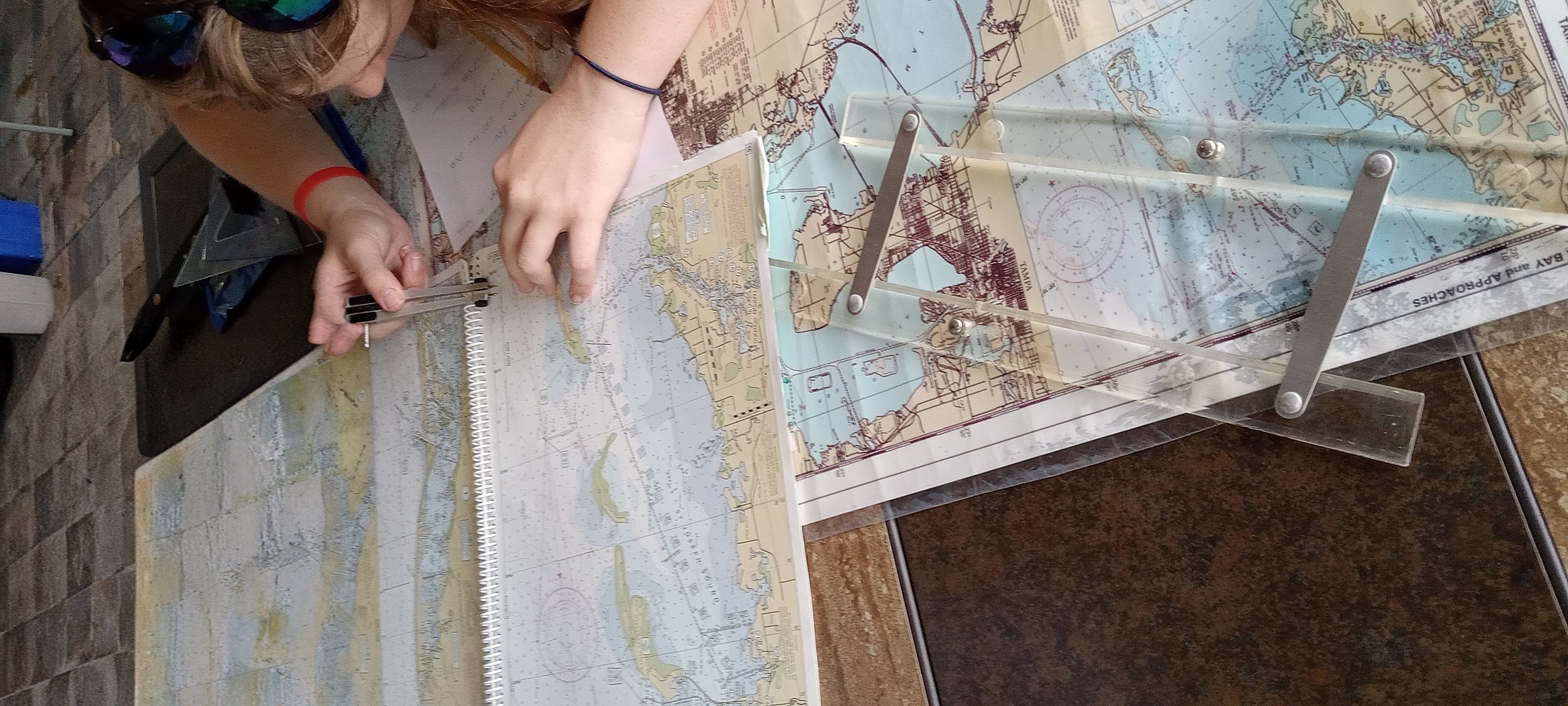
For any route: download or print NOAA Chart 11411 or the relevant USGS quadrangle. Do not rely exclusively on a phone app. Phones die, screens wash out in direct sunlight, and app data requires a cellular or Wi-Fi signal. Paper charts do not have these liabilities. And print your own charts on waterproof paper.
Planning Your Days: The Rule of Thirds
Experienced expedition paddlers often plan daily distances using a rough rule of thirds: one third of your estimated daily distance in the morning when you are fresh and conditions are usually calmer, one third in the early afternoon after rest and food, and one third left in reserve for conditions that do not cooperate. On a ten-nautical-mile day, that means you are making firm camp commitments after seven miles and keeping three miles of flexibility in your back pocket. This is not conservative; it is professional.
Afternoons on Florida’s Gulf Coast in the warmer months produce convective thunderstorms with predictable regularity. They build from the west and south and they arrive fast. Youth should be in camp and under shelter by 2:00 PM on any summer afternoon trip, full stop. On winter and shoulder-season trips this window extends, but the habit of early camp setup is one that will serve you across every future expedition.
Part Four: Gear Translation Guide
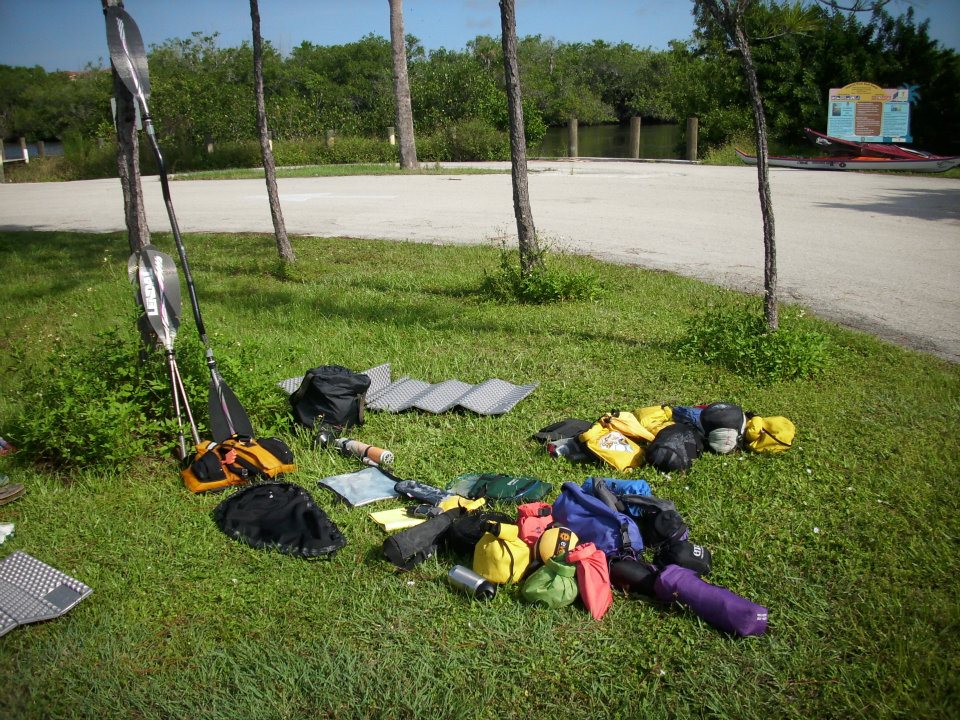
What Transfers Directly From Your Pack
Your backpacking kit is not useless here. Several categories translate almost without modification:
- Sleep system — Your sleeping bag and pad are fine as-is. On barrier island trips from October through April, a 30-degree bag provides comfortable margin. Summer trips often require nothing more than a sheet and a light blanket due to heat and humidity.
- Stove and cook kit — Your canister stove works on the water. Canister fuel is preferred over alcohol stoves because wind is constant in coastal settings and alcohol stoves lose significant efficiency in even modest breeze.
- Navigation tools — Your compass and map-reading skills are directly applicable. Charts replace topographic maps but the orientation and triangulation skills are the same.
- First aid and emergency kit — Your ten essentials kit carries over intact. Add a signal mirror and a VHF marine radio as specific-to-water additions.
- Leave No Trace practice — All seven LNT principles apply on the water, with the addition of grey water disposal protocols for soap and cooking runoff in tidal environments.
What Needs to Change
This is where your backpacking instincts need a deliberate override:
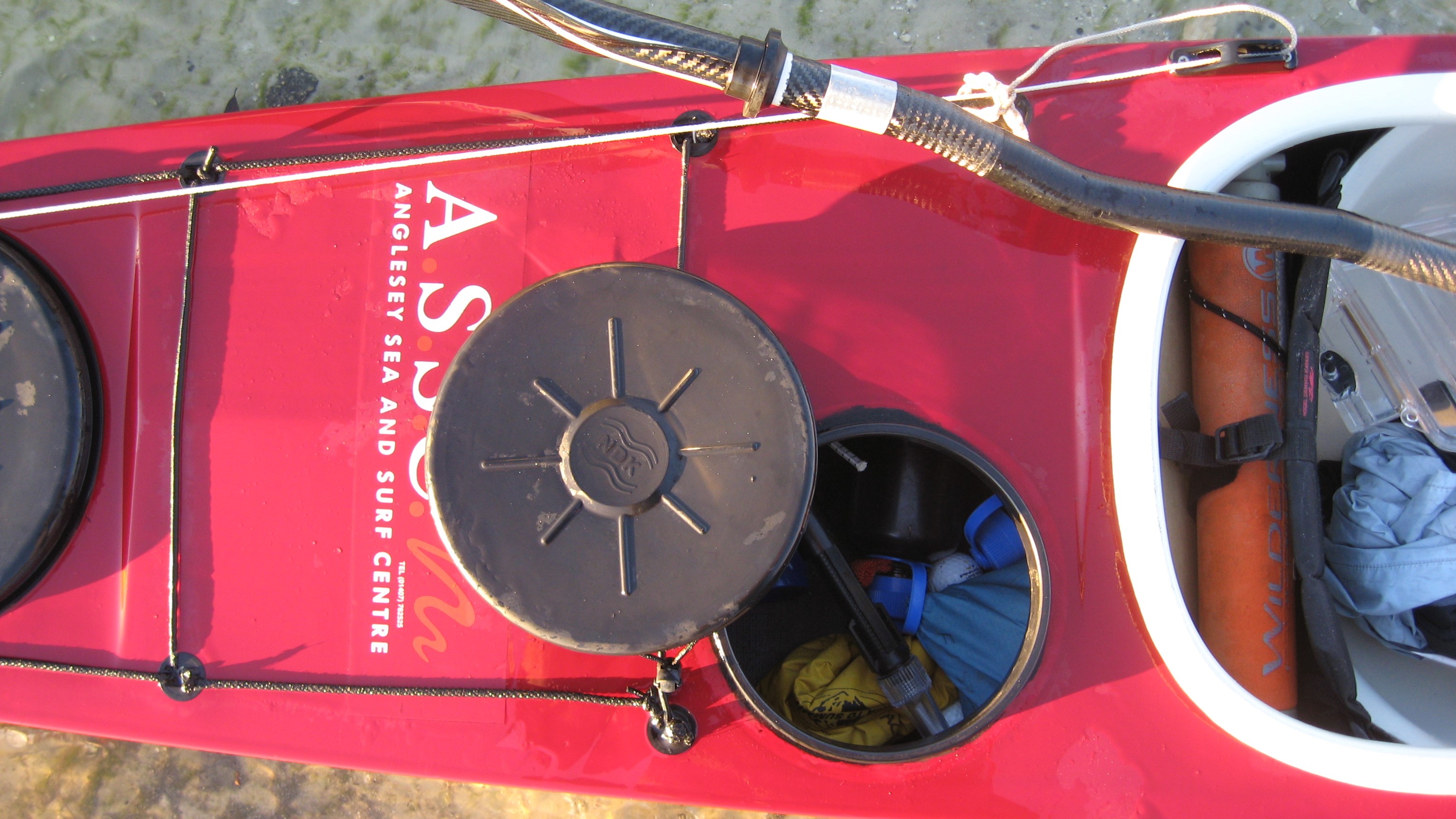
- Dry bag organization — Nothing goes into a kayak hatch without being in a dry bag. Nothing. Not your sleeping bag, not your clothes, not your food. The hatches on most production touring kayaks are water-resistant, not waterproof. Plan accordingly.
- Weight distribution — Heavy items belong in the center of the kayak, as low as possible in the hull. Camping stove, water, food, and cook kit in the day hatch or the hatch closest to the paddlers seat. The lightweight bulky items like sleeping bags and clothing to the bow and stern. An improperly loaded kayak handles poorly and fatigues you far faster than a well-trimmed one.
- Cotton is now completely disqualified — On a backpacking trip, cotton is inadvisable. On a kayak trip where capsize and spray are routine, cotton is genuinely dangerous. Wear synthetic or wool for everything that touches your skin. Pack one extra complete set of dry clothing in a waterproof bag in your bow hatch. That is your emergency dry kit. Do not open it except in a genuine emergency (I also include a synthetic fleece jacket because hypothermia can happen in the summer).
- Footwear — Your trail runners are not appropriate for paddling. Water shoes or neoprene boots that drain quickly and protect your feet from oyster bars and sharp bottom debris are necessary. You will launch and land in the water, often in muck and shell hash.
- PFD is non-negotiable — Scouting America BSA Safety Afloat policy and common sense both require a properly fitting Type III or Type V personal flotation device worn at all times on the water. Not strapped to the deck. Worn.
The Practical Checklist: Scout First 3-Day/2-Night Kayak Trip
Use this list as a starting point. Your specific route, season, and group size will require adjustments. This list is organized by category, not by hatch. Before you load a single bag, read your route conditions, check tidal tables for all three days, and get a VHF marine weather forecast.
Safety & Navigation — Non-Negotiable Category
☐ PFD (worn, not stowed) — Type III or Type V, properly fitted
☐ Paddle float and bilge pump — one per paddler
☐ Tow line — minimum 50 feet, rigged and accessible
☐ VHF marine radio — NOAA weather channels, waterproof or in waterproof case
☐ Signal devices — mirror, whistle, flare kit appropriate to coastal water distance
☐ Waterproof paper charts — NOAA or state trail maps of your route
☐ Compass — baseplate style, attached to PFD or deck
☐ Float plan — filed with responsible adult ashore before departure, as required by BSA Safety Afloat
☐ First aid kit — Wilderness-adapted, including blister care and marine-specific additions
☐ Sun protection kit — UPF 50+ shirt, hat, sunscreen SPF 50 minimum, lip protection, sunglasses with strap
☐ Bug protection — DEET-based or permethrin-treated clothing; Florida barrier islands have relentless no-see-ums
☐ Emergency contact info — laminated card, in each paddler’s PFD pocket
Paddling Equipment
☐ Kayak with sealed bow and stern bulkheads — minimum requirement for overnight water travel
☐ Properly fitted paddle — correct length for your kayak beam and your torso height
☐ Spare paddle — one per group, secured to deck
☐ Spray skirt — for sit-in kayaks; required for any open water exposure
☐ Paddle leash — especially useful in tidal current where a dropped paddle drifts fast
☐ Deck bag or day hatch access — for items needed while paddling: water, snacks, sunscreen, chart
☐ Cockpit cover — for rain and spray during rest stops
Shelter & Sleep
☐ Freestanding tent with full rain fly — nothing worse than staking a tent in beach sand that offers zero purchase; freestanding required
☐ Ground cloth or footprint — barrier island beaches are beautiful; the shells underneath are sharp
☐ Sleeping bag appropriate to season — 30-degree for cool months; sheet/light blanket for summer
☐ Sleeping pad — self-inflating is a reasonable luxury in a kayak; bring it
☐ Hammock with bug net — optional but excellent — if trees are available, this is the superior Florida coastal camping shelter
☐ Tarp — 8×10 minimum; Florida afternoon thunderstorms are not suggestions
Clothing
☐ Synthetic or wool base layer — one worn, one dry backup in sealed emergency kit
☐ Long-sleeve UPF 50+ paddling shirt — minimum two for a three-day trip
☐ Quick-dry shorts or pants — two pair; you will be wet
☐ Fleece or light insulating layer — even summer nights on the water get cool after a hot day
☐ Rain jacket — essential, not optional
☐ Paddling gloves — optional for warm weather; mandatory for extended cold-water paddling
☐ Water shoes or neoprene paddling boots — no trail runners; no sandals in oyster country
☐ Wide-brim hat with chin strap — the Gulf breeze will take a regular brim hat in under ten seconds
Food & Water
☐ Drinking water: minimum 3 liters per paddler per day — plus emergency reserve; no reliable freshwater resupply on most coastal routes
☐ Water filter or purification — Sawyer Squeeze or similar; estuarine water is not safe to drink untreated
☐ Canister stove and fuel — alcohol stoves perform poorly in coastal wind
☐ Cook pot and eating vessel — Trangia mess tin or similar works exceptionally well
☐ Day One dinner — something real, celebrating the first night; this is not the time for a sad rehydration pouch
☐ Day Two and Three meals — lightweight, high-calorie, simple to prepare; you are paddling and cannot spend forty minutes cooking
☐ Snacks for paddling days — one per hour of expected water time; you burn calories on the water faster than you expect
☐ Bear canister or food hang kit — barrier island raccoons are not afraid of you; act accordingly
☐ Biodegradable soap and grey water plan — no soap runoff into tidal water
☐ Garbage bags (2 per paddler) — pack out everything, including wet gear, fish scraps, and others’ refuse
Navigation & Trip Admin
☐ Tidal tables for all three trip days — printed and in a waterproof sleeve
☐ VHF weather radio forecast reviewed pre-launch — NOAA Weather Radio is your pre-launch bible
☐ Campsite confirmation and any required permits — Florida state parks require advance reservation; plan accordingly
☐ Emergency evacuation plan — know your bailout points for each day
☐ Laminated float plan copy in each kayak — BSA Safety Afloat requirement; non-negotiable
Before You Push Off
One Last Word From the Dock
I have been putting kayaks in the water off the Gulf Coast for nearly three decades. I have paddled with Sea Scouts who became ACA instructors. I have paddled with Eagle Scouts who were quietly terrified of open water and paddled through that fear one nautical mile at a time. I have paddled with my son Tyler, who knows that the best camp meal always tastes better after a long crossing, and I have paddled with Sean Fitzgibbon, who will absolutely catch more fish than you no matter what you do.
Every one of those trips taught me the same thing: the skills transfer. Your years of backpacking — the judgment, the self-reliance, the ability to assess a situation and make a sound decision while tired and hungry — those are the skills that actually matter on the water. The kayak is just a different way of carrying your gear through a different kind of wilderness.
Take a lesson before your first trip. Not because you cannot figure it out on your own, but because a few hours of instruction on wet exits, paddle bracing, and loaded kayak handling will save you an enormous amount of suffering on Day One. The ACA and Scouting America BSA both have qualified instructors along virtually every stretch of Florida coastline. Use them.
Read the tides. Check the weather. File your float plan. And then go find out what is waiting for you around the next mangrove bend.
“The trail doesn’t end at the water’s edge. It just gets wetter and considerably more interesting.”
— Jeff Fabiszewski
Jeff Fabiszewski is an ACA Level 3 Coastal Kayaking Instructor, Wilderness First Responder, Eagle Scout, Vigil Honor member, and Sea Scout ship leader based in St. Petersburg, Florida. He operates Liquid Rhythm Kayaking and has guided kayak expeditions from the Everglades to Maine’s Inside Passage. Find him at LiquidRhythmKayaking.com
 Liquid Rhythm Adventures' Journal