
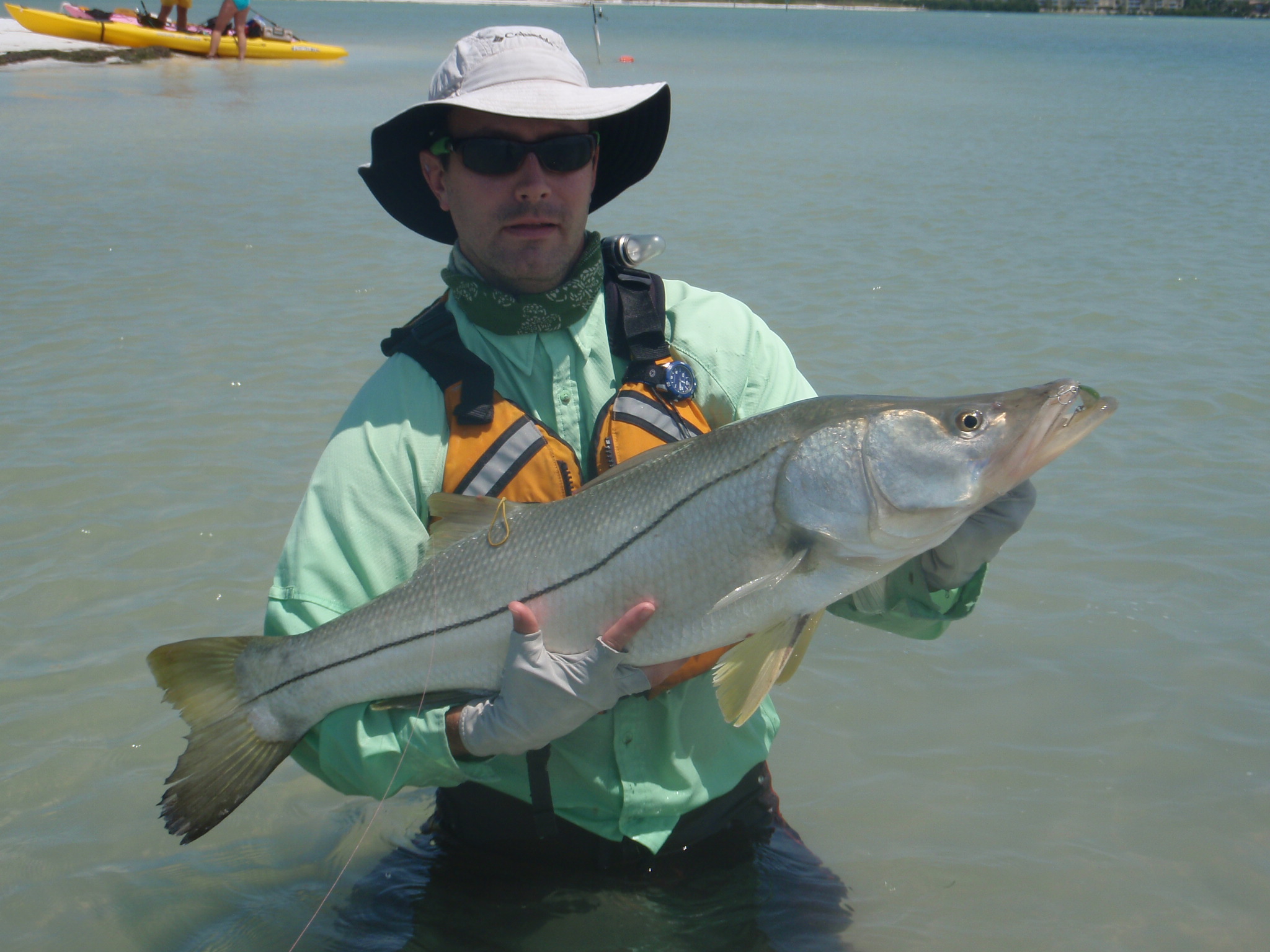
If you’ve never waded the flats around Caladesi Island State Park in Florida, let me paint you a picture: crystal-clear water, mangrove tunnels that seem pulled from a pirate map, and tidal flats so rich with life they practically shimmer with opportunity… and mullet. Lots of mullet.
One hot morning—humidity hovering somewhere between “tropical spa” and “swamp sauna”—I was out kayak fishing, scanning for shadows and tail flicks. I had just anchored near a skinny channel where I’d seen a snook bust bait the day before. I tossed a topwater plug, gave it a twitch, and—BOOM—the water sucked down like a vortex.
This snook didn’t leap. He didn’t show off. No flashy tail-walking or acrobatics. Instead, he went full brute-force, diving deep and trying to power his way into the channel. This wasn’t a flashy fight—it was a bulldog battle, testing the drag, the rod backbone, and my balance in waist-deep water.
Wading and sliding around in the water, boots squishing into the soft sand as I kept tension and guided the fish out of the current. Slowly but surely, I gained line until I had him in hand: a beautiful, heavy-bodied snook, the kind that makes your arms shake and your heart race. After a quick, respectful photo (gloves on, gills protected), I gently revived and released him, watching him vanish like a silver ghost into the depths of the tidal cut.
🎯 Snook-Smart Fishing Tips from Jeff:
- Know the Slot & Season: Snook are strictly regulated. Always check FWC rules before you target them—this one was a perfect candidate for a safe release.
- Use the Right Gear: Circle hooks, a quality leader, and fish-handling gloves protect both you and the fish.
- Catch, Photo, Release: Keep ’em wet. Support the belly. Snap quick. Return gently.
- Tide Timing: Fish moving water—outgoing tides around mangrove cuts are pure magic for ambush predators like snook.
- Pack a First Aid Kit: Fish spines, oyster cuts, and hooks-in-thumbs happen fast. I carry one tailored for fishing injuries at all times (ask me what’s in it!).
🧭 Why Caladesi?
Caladesi’s remote inshore access makes it ideal for kayak anglers who want to escape the buzz of the boat ramps. With proper tide knowledge and a good chart, you can find pockets where snook stage, ambush bait, and test your gear (and nerves).
🛠️ Pro Tip: Ten Essentials to Fishing for Snook
Just like backpacking, successful and safe kayak fishing relies on being prepared. Here’s how the Ten Essentials translate to the inshore angler lifestyle:
- Navigation – Waterproof chart, compass, and GPS app for tracking tides and avoiding dangerous channels.
- Headlamp & Backup Light – Pre-dawn launches and dusk bites are common. I use the ENO Twilights for ambient lighting and a Petzl headlamp for rigging gear in the dark. A Goal Zero Nomad 20 keeps batteries topped off.
- Sun & Skin Protection – Long sleeves, buff, SPF lip balm, and insect repellent. Florida no-see-ums will eat you alive before the fish bite.
- Fire Starter – Not for the kayak, but a backup lighter in a dry bag is smart for emergency landfall situations (note: never cook with isobutane inside enclosed spaces!).
- Shelter – I pack a lightweight tarp in case weather moves in fast—common in summer months.
- Extra Water – 2 liters minimum. An insulated bottle or bladder plus electrolyte mix packets = better endurance.
- Extra Food – Jerky, granola, and vacuum-packed meals. Enough to stay strong if weather delays your return.
- Clothing – A dry bag with spare shirt, socks, and lightweight rain shell keeps you warm if soaked.
- First Aid Kit – Fishing-specific items like antiseptic wipes, bandages, tweezers for hooks, wound irrigation syringe, and a few feet of duct tape. I also carry a waterproof card with emergency contacts and allergy info.
- Multitool/Knife – surgical scissors, aka “sea snips.” Compact, stainless, and sharp enough to cut braid, mono, leader, and even hook eyelets in a pinch.
Bonus Local Tip: If you see illegal fishing activity, marine animal injuries, or suspicious wildlife behavior, contact FWC (Florida Fish and Wildlife Conservation Commission) at 888-404-3922. Save the number to your phone before you head out.
Want to learn the tides, techniques, and safety skills for inshore kayak fishing? I teach private clinics and small group sessions on wilderness angling, paddle safety, and backcountry cooking—because a great day on the water deserves a hot meal after.
Let’s paddle smart, fish respectfully, and maybe share a few more snook stories together.
– Jeff Fabiszewski
 Liquid Rhythm Adventures' Journal