
The useful answer: A Greenland paddle is worth trying if you want to explore a narrow blade, sculling, and recovery skills. Allow time to learn its technique and find a suitable fit. It offers no automatic promise of greater speed, comfort, or injury prevention.
A Greenland paddle looks simple enough to invite an opinion before it has ever touched the water. I would rather paddle with it first. A narrow blade can do a surprising amount of work, provided I stop expecting it to behave exactly like the broad blade I used yesterday.

What I value
I enjoy the feel of wood, the long blade, and the opportunity to move between paddling, sculling, and recovery practice. The design connects my everyday kayaking with a much older Greenlandic Inuit tradition. Curiosity is a good reason to try a paddle. It is also a good reason to seek instruction.
A narrow blade presents a smaller profile to the wind than many broad blades, although the difference depends on the paddles and conditions. My preference is a personal one, rather than proof that everybody should put their other paddle in the garage.
Fit comes first
Overall length, blade width, shaft length, grip shape, kayak width, and the paddler’s needs all matter. Body measurements can provide a starting point. Trying the paddle on the water tells me more.
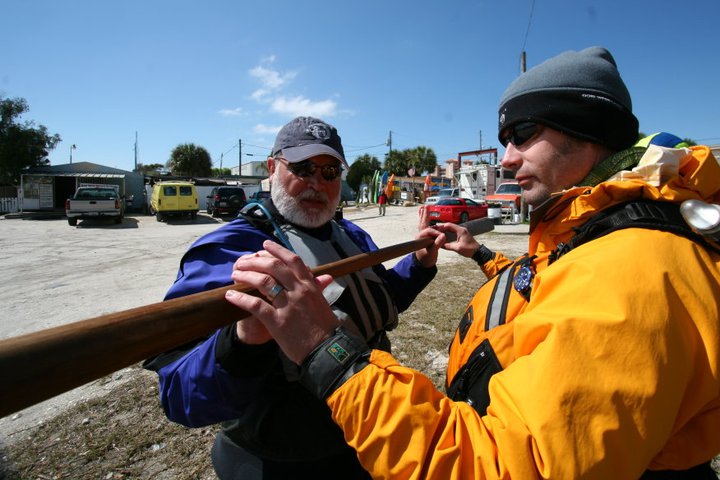
I have been Greg Stamer’s student, friend, and fellow instructor. In his published advice on paddle sizing, he writes, “The key is to treat these guidelines as a ballpark estimate ONLY and experiment freely.” That leaves room for the person in the boat, rather than asking the person to fit a formula. Source: Greg Stamer, “What’s the best length for a Greenland Paddle?”, KayakVagabond, January 20, 2012.
Greenland paddles are sold commercially as well as made to order or carved at home. Custom construction is an option. Trying different dimensions can help you decide what fits.
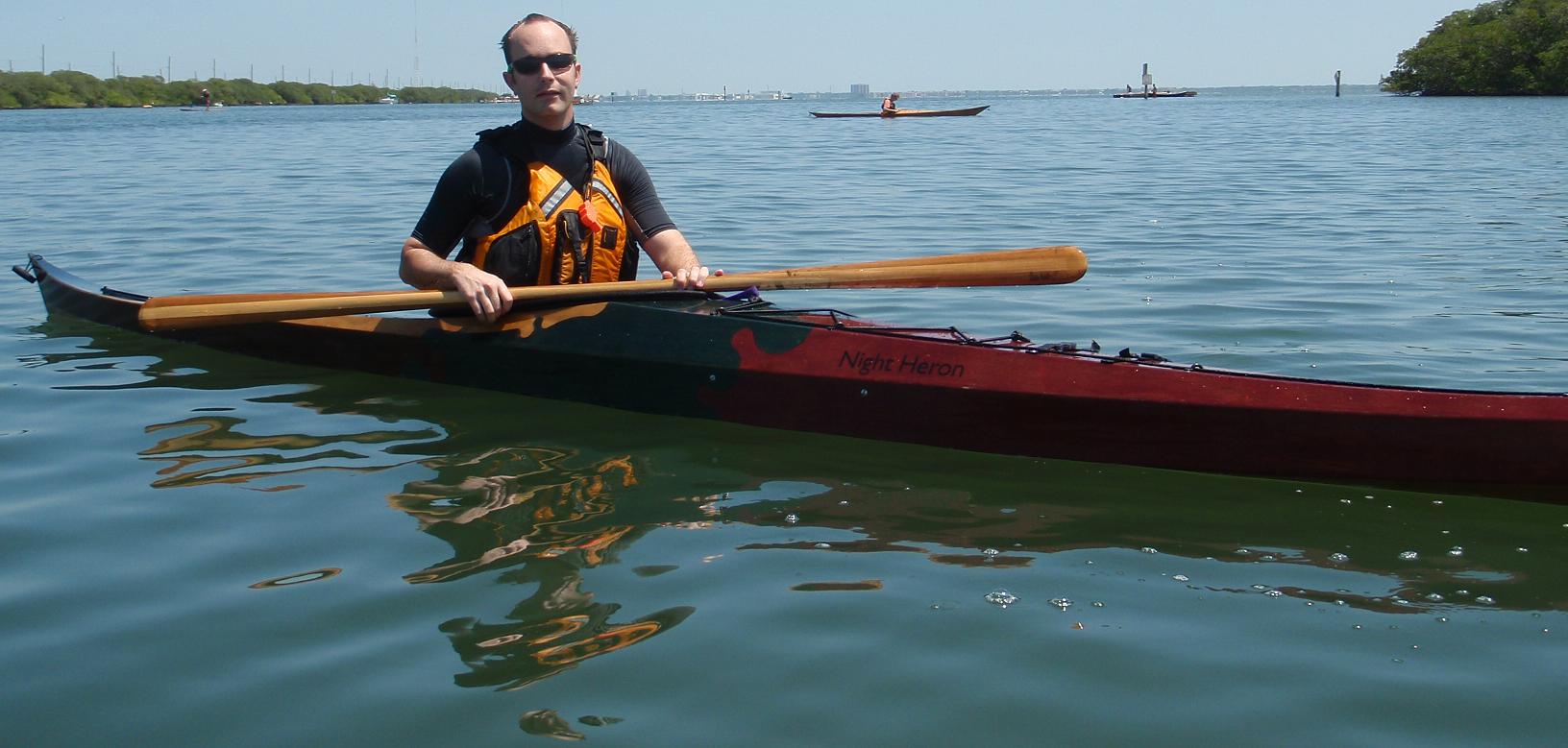
Remembering his grandfather’s instruction, Maligiaq Padilla spoke of learning “how to hold the paddle if you want to go faster.” That puts the attention where I want it: on learning to use the paddle. Source: Jeff Moag’s interview, “Unfiltered: Maligiaq Johnsen Padilla,” Canoe & Kayak, May 2012, republished online by Men’s Journal on December 5, 2019.
The learning curve
At first, a long narrow blade may feel unfamiliar or flutter. Before deciding it lacks power, look at fit, grip, immersion, and the movement through the water.
Greg Stamer’s Qajaq USA stroke reference describes a slight forward blade cant that can help immerse the blade and reduce flutter. It is one useful approach, not the only Greenland stroke.
A splash at the end of a stroke is evidence that water moved. It is not a speedometer. I look for a controlled stroke I can repeat comfortably over the distance I intend to paddle.
Speed and comfort
A Greenland paddle can support purposeful touring and fast paddling. It does not automatically become faster than a Euro blade or a wing paddle. Technique, conditioning, hull, blade dimensions, and conditions affect the result.
Different paddle designs can share elements of body movement while asking for different technique. Learn the blade in your hands.
Comfort matters, but no blade design guarantees protection from tendonitis or shoulder injury. A suitable paddle and sound technique must be considered alongside workload and the needs of the person using it.
Wood, care, and practical limits
Wooden paddles appeal to me for their feel and craftsmanship. Care depends on the finish: an oiled paddle and a varnished paddle need different treatment. Follow the maker’s advice rather than automatically sanding and oiling every wooden blade.
Consider transport length, storage, maintenance, purchase cost, and whether the paddle suits the instruction or paddling you plan to do. Compare the actual paddle’s dimensions, construction, and care requirements before buying.
The best test is a suitable paddle, a little patient instruction, and enough time on the water to get past the unfamiliar first strokes. The paddle has nothing to prove. I am the one learning to use it.
Explore my Greenland kayaking collection, or visit Classes & Prices to arrange instruction.
Editorial note: This older article has been revised to correct technical claims and update links. Its original publication date and photographs are retained.
Keep learning on the water
A useful first lesson is an opportunity to try an appropriate paddle with feedback, rather than buying from a sizing formula alone. Tell me about your kayak, experience, and goals when asking about instruction.
For a club or symposium, ask me to teach a Greenland paddling clinic. For individual practice, compare my Tampa Bay lessons.


Leave a Reply