
Preparedness and safety review: October 25, 2026. This is household planning guidance. Follow current local emergency instructions, product labels, and individual medical advice.
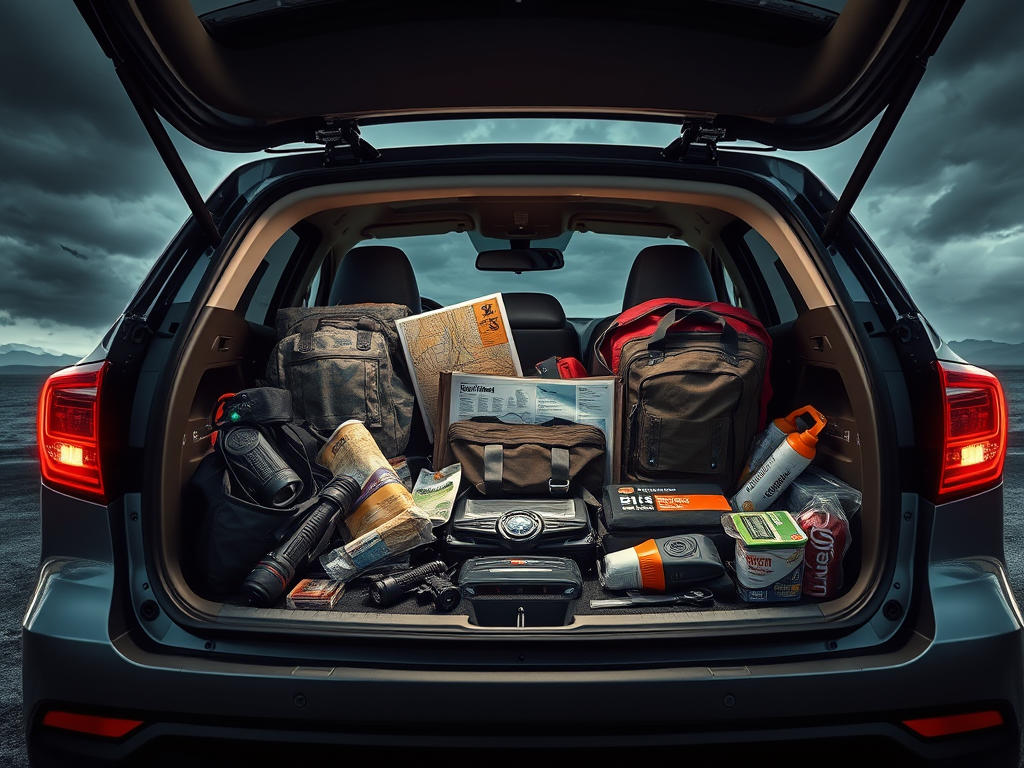
The vehicle bag helps the family reach a safe destination. It is not a plan to ride out a hurricane beside the road. Pack before conditions deteriorate, confirm the destination, and leave when instructed or earlier when your circumstances require it.
Separate the departure bag from the home reserve
Maintain at least seven days of essentials for the household. Carry a manageable bag with medicines, documents, light, communications, clothing, and food that needs no cooking. Load additional protected water and food for the trip and destination as space, vehicle limits, and the plan allow. Do not delay evacuation to fit the whole pantry into the trunk.
The home water baseline is one gallon per person daily for seven days, with additional allowances for individual needs and pets. A smaller travel supply needs a realistic route and safe resupply arrangement. Do not call three days of water a complete seven day plan. See the household guide and quantity worksheet.
What travels within reach
- Identification, insurance information, emergency contacts, essential documents, keys, and some small denomination cash, protected from water.
- Prescription medicines and medical supplies, with a pharmacist approved storage plan. Keep a medication and allergy list. Bring assistive devices, glasses, hearing aid supplies, and chargers as needed.
- Safe drinking water in manageable containers, familiar food that can be eaten without cooking, utensils, and a manual can opener where needed.
- LED lights, spare batteries, a charged power bank, compatible cables, and a battery powered weather radio tested for local reception.
- Paper maps, downloaded maps, destination details, an outside area contact, and written instructions for another household member to drive or make calls.
- Dry clothes, sturdy closed shoes, rain protection, first aid supplies, soap, hygiene items, toilet supplies, and bags for rubbish.
- Pet food, water, medicines, carrier or restraint, identification, and destination acceptance. Do not assume every shelter accepts every animal.
- Masks or respirators suited to the wearer, tissues, and an illness plan for shared transport and shelter.
Before the engine starts
Confirm the current evacuation zone, county instructions, shelter openings, accessibility, and routes. Fuel or charge the vehicle early. Account for everyone. Never drive through floodwater or around a closure. A vehicle and a tent are not substitutes for an appropriate hurricane shelter.
Keep dangerous cargo out of the passenger plan
A gas chainsaw, loose fuel container, and stove fuel do not belong loose beside passengers. Leave specialist cleanup equipment behind unless a separate safe transport arrangement is necessary. Follow container instructions, transport rules, vehicle restrictions, and shelter policies. Do not leave medicines, batteries, or fuel indefinitely in Florida vehicle heat.
Use battery lighting. Run portable generators outdoors at least 20 feet from doors, windows, and vents, with exhaust directed away from occupied buildings. Never operate them in homes, garages, enclosed porches, or other enclosed spaces, even with openings raised. A CO alarm does not make an unsafe location safe. Follow CDC outage guidance and the manufacturer’s instructions. If an apartment has no compliant operating location, arrange battery power or relocation instead.
Use portable camp stoves, charcoal grills, alcohol burners, solid fuel stoves, and fuel lanterns outdoors according to their manuals. Never use them in a home, tent, vehicle, or enclosed shelter, and never use cooking equipment to heat a room. Wait for safe outdoor conditions. A meal that needs no flame belongs in every storm pantry.
If travel becomes unsafe, seek current emergency instructions. Call 911 for immediate danger and give your location and needs. Do not improvise a recreational campsite in an evacuation zone.
Leaving after the storm can still be the right decision
Evacuation planning does not end at landfall. Prolonged heat, loss of safe water or sewer service, damaged housing, unavailable medicine storage, or inadequate power for medical equipment may require relocation afterward. Identify suitable accommodation, transport, pet arrangements, and an outside area contact before the event. Confirm that the destination is open and can actually meet your needs.
Set household decision points before a crisis: when dependable medical power must be available, when another safe water supply is needed, and what would make the building unsuitable to occupy. Seek clinical or equipment supplier advice for medical limits. Do not wait until the last battery or final water container is empty to arrange help.
After the storm, follow current reentry, closure, curfew, and travel instructions. Avoid unnecessary travel, never drive through floodwater, and obtain emergency assistance for immediate danger. A bag in the car supports a safe departure; it does not make a hazardous route passable.
Review the household guide and the power contingency plan. Larger pantry reserves are my practical recommendation beyond Florida’s seven day baseline. They should buy time to make a good decision, not persuade the family to remain in an unsafe home.
Practice departure
Time a calm practice loading session. Check that an adult can lift the bags, doors and exits remain clear, and medicines can be reached without unloading everything. Keep a written packing list beside the bag. The best evacuation tool is leaving while the road still offers choices.
Keep learning: the Florida preparedness reading guide
Start with the household plan, then work through the practical skills. These companion articles connect FloridaOATS and Liquid Rhythm Kayaking.
- Household planning, evacuation, sanitation, and lessons from COVID
- Seven day quantities and a practical household equipment check
- First aid supplies, prescriptions, and household illness
- Weather information, lighting, and backup power
- Safe meals when the lights go out
- A seven day pantry menu and food storage
- First aid when help is delayed
- Assessing hazards after the storm
- The limits of flame lanterns
- Using the MSR Dragonfly safely
- Fire blankets, extinguishers, and escape
- The original Hurricane Calm plan, revised
- The responsibility behind staying calm
- The FloridaOATS hurricane archive introduction


6 Comments