
Preparedness and safety review: October 25, 2026. This is household planning guidance. Follow current local emergency instructions, product labels, and individual medical advice.
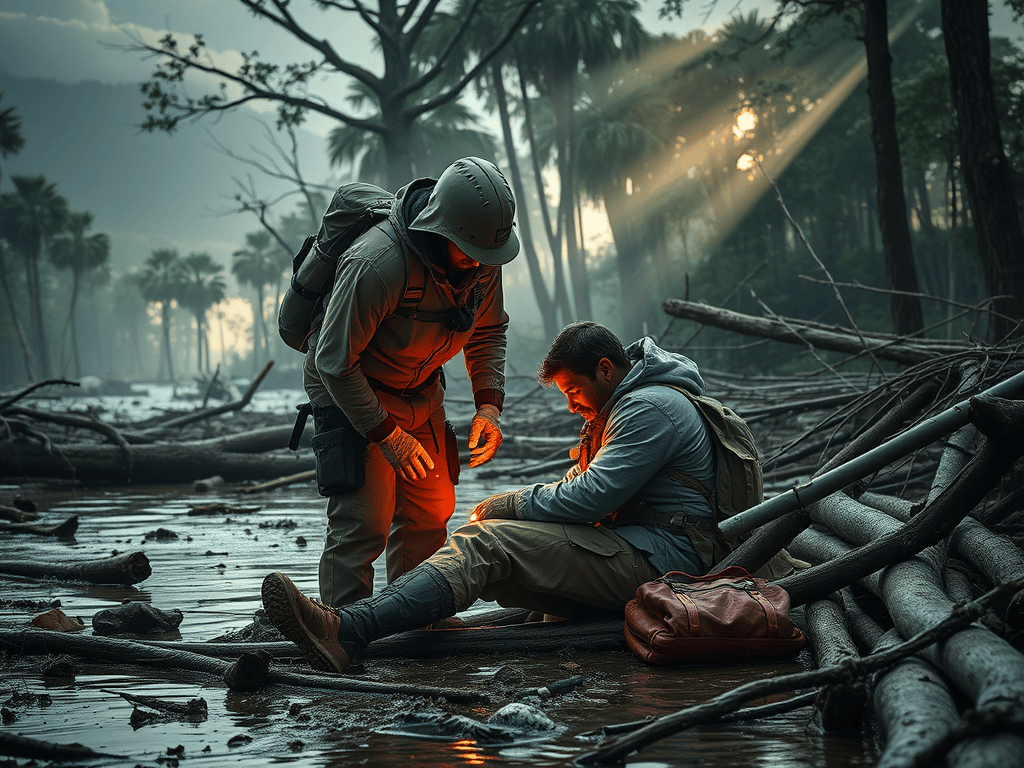
After a hurricane, blocked roads and damaged services can delay medical care. Wilderness first aid training can help a person assess, provide immediate care, document changes, and arrange help. It does not turn every injury into a home treatment problem or replace professional care.
Check the scene and call for help
Stay out of floodwater, damaged buildings, electrical hazards, and areas with unstable trees. Call 911 for immediate threats such as severe bleeding, breathing difficulty, chest pain, suspected stroke, severe allergic reaction, or confusion. Give the exact location, hazards, patient condition, and access problems. Do not delay a call because responders may be busy.
Immediate priorities within your training
- Severe bleeding: Apply firm direct pressure. For life threatening bleeding from an arm or leg, use a genuine commercial tourniquet according to training and its instructions. Do not delay effective bleeding control for elevation. Record the application time and do not loosen or remove the tourniquet yourself.
- Breathing and circulation: Follow current first aid and CPR training and dispatcher instructions. Obtain an AED when appropriate and available.
- Burns: Stop the exposure safely and cool a thermal burn with clean, cool running water. Avoid ice, grease, and household remedies. Cover appropriately and seek urgent care for significant burns, breathing concerns, electrical injuries, or chemical exposure.
- Possible fracture: Support the injury in the position found, limit movement, and arrange appropriate care. Do not force a deformity straight. Monitor circulation, sensation, and movement as trained.
- Minor wounds: Irrigate with safe water and clean surrounding skin. Do not dig out embedded objects or pour harsh chemicals into wounds. Deep, dirty, puncture, or water exposed wounds may require prompt clinical assessment and tetanus review.
- Suspected CO exposure: Leave the area for fresh air if you can do so safely and call 911. Do not enter a dangerous atmosphere to attempt a rescue. Headache, dizziness, vomiting, or confusion in several people warrants particular concern.
Use current Red Cross severe bleeding guidance and burn guidance alongside recognized practical training. This article is a planning aid, not a complete treatment course.
Watch for deterioration
Record the event, symptoms, medical history, medicines, allergies, care given, and changes over time. Reassess while help is arranged. Rapidly increasing pain, redness, swelling, fever, or blistering after water exposure needs urgent assessment. People with diabetes, immune suppression, or liver disease may need particular caution after contaminated water exposure.
Prevent the next patient
Use battery lighting. Run portable generators outdoors at least 20 feet from doors, windows, and vents, with exhaust directed away from occupied buildings. Never operate them in homes, garages, enclosed porches, or other enclosed spaces, even with openings raised. A CO alarm does not make an unsafe location safe. Follow CDC outage guidance and the manufacturer’s instructions. If an apartment has no compliant operating location, arrange battery power or relocation instead.
Use portable camp stoves, charcoal grills, alcohol burners, solid fuel stoves, and fuel lanterns outdoors according to their manuals. Never use them in a home, tent, vehicle, or enclosed shelter, and never use cooking equipment to heat a room. Wait for safe outdoor conditions. A meal that needs no flame belongs in every storm pantry.
Know when the house is too hot or medically unsuitable
Choose a destination with dependable cooling and transport before the outage. Check on older adults, infants, people with chronic illness, and anyone unable to recognize or communicate distress. Rest, shade, drinking water, and cooling measures help, but a fan or damp cloth is not a guarantee against heat illness. Follow CDC heat guidance; fans can be inadequate or harmful in very hot conditions. Confusion, collapse, or suspected heat stroke requires emergency help and prompt cooling.
Florida’s disaster checklist calls for a two week minimum medication supply. Arrange refills with the pharmacist or clinician, subject to legal, insurance, and prescription limits. Follow each medicine’s storage instructions. Plan safe cooling for medicines that require it, glucose monitoring supplies where needed, and backup power or relocation for medical devices. Never ration essential treatment to make a kit last longer.
Prepare the household first aid and prescription kit, learn how to assess the scene, and practice first aid, CPR, and bleeding control before an event. Youth can help with safe tasks under suitable supervision. Scouting experience supports learning; it does not qualify anyone for hazardous rescue or cleanup.
The useful helper knows both what to do and when to call. Asking for assistance is sound judgment.
Keep learning: the Florida preparedness reading guide
Start with the household plan, then work through the practical skills. These companion articles connect FloridaOATS and Liquid Rhythm Kayaking.
- Household planning, evacuation, sanitation, and lessons from COVID
- Seven day quantities and a practical household equipment check
- Packing for evacuation and vehicle travel
- First aid supplies, prescriptions, and household illness
- Weather information, lighting, and backup power
- Safe meals when the lights go out
- A seven day pantry menu and food storage
- Assessing hazards after the storm
- The limits of flame lanterns
- Using the MSR Dragonfly safely
- Fire blankets, extinguishers, and escape
- The original Hurricane Calm plan, revised
- The responsibility behind staying calm
- The FloridaOATS hurricane archive introduction


Leave a Reply