
Preparedness and safety review: October 25, 2026. This is household planning guidance. Follow current local emergency instructions, product labels, and individual medical advice.
After the storm, useful information and a dependable light can be worth more than an impressive collection of chargers. Build a communication and power plan around the devices the household actually needs. Brand names do not tell you how long the lights will stay on.
Receive warnings before you need them
Use Pinellas County emergency information, your local emergency management office, the National Weather Service, and the National Hurricane Center. Sign up for local alerts before the storm. Test a battery powered NOAA weather radio and an AM/FM radio for reception in the place you will shelter. Know whether the device receives weather broadcasts and whether it actually has an alert function.
Keep paper contacts and an outside area contact. Text messages can sometimes get through congested networks when calls do not, but neither is guaranteed. Offline maps help with navigation; they do not provide live warnings, road closures, or shelter openings.
Count usable power
List every device, its wattage or measured daily energy use, and required hours. A 10 watt device running eight hours uses 80 watt hours. A seven day schedule at that rate requires 560 watt hours before conversion losses and reserve. Check usable battery output and compatibility; the headline battery capacity is not all available at every outlet.
Compare power banks using watt hours where available, not only milliamp hours. Include the right cables, spare batteries, and a conservative reserve. Test actual runtime safely. A small power bank suitable for a phone is not a refrigerator or medical equipment backup.
When the batteries run down before the grid returns
Seven days is the starting reserve, not a restoration promise. Plan how to obtain safe supplies or reach suitable accommodation if essential services remain unavailable.
Write the answer to this question before the storm: What will we do when our batteries are depleted and reliable charging remains unavailable? Identify a safe, confirmed charging arrangement, replacement batteries where appropriate, and a suitable destination with dependable electricity. Do not make an unverified solar estimate or a generator without a safe operating location the only answer.
Utility restoration announcements may refer to customers able to receive electricity safely. After Michael, Duke Energy reported restoring customers who could receive power while approximately 3,800 customers in Bay and Gulf counties remained unable to receive it because homes or businesses were damaged or destroyed. Required building or electrical repairs can delay a particular household after the surrounding network is working.
Follow utility instructions and use qualified electrical help for required repairs. Do not reconnect damaged equipment yourself. For medical devices, arrange continuity and relocation before the tested battery reserve is exhausted; consult the clinician and equipment supplier about the necessary margin.
See the household guide for the historical context. Longer pantry targets are my recommendations, separate from Florida’s seven day baseline; no quantity of food guarantees a working electrical connection.
Solar and crank charging are supplements
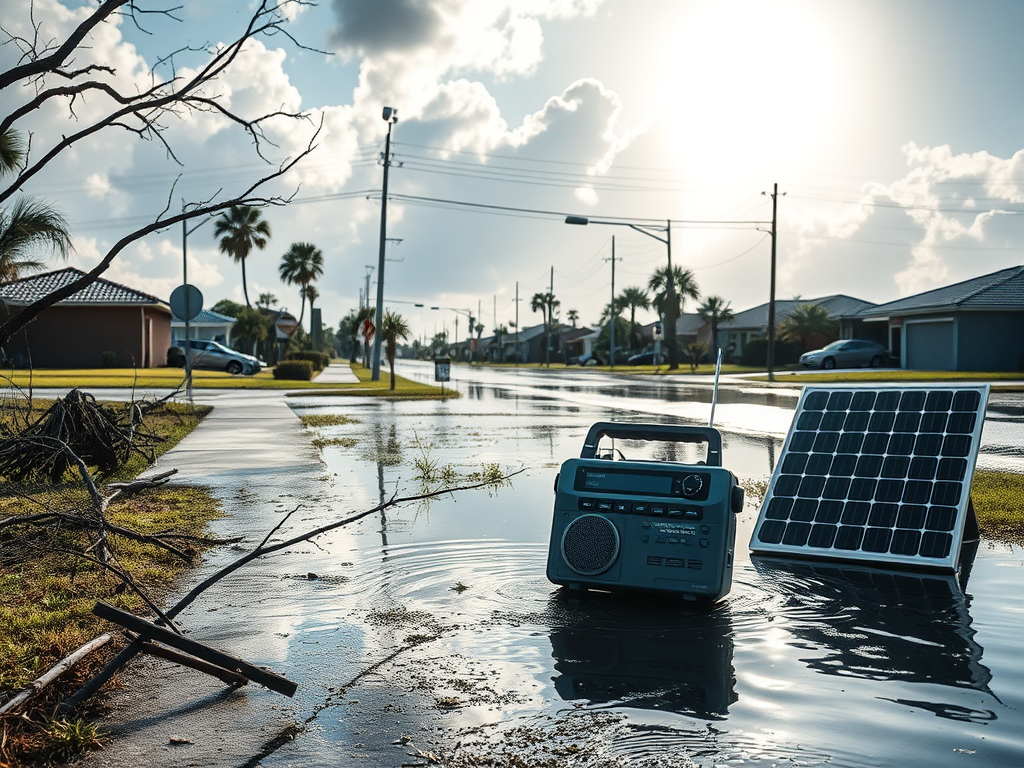
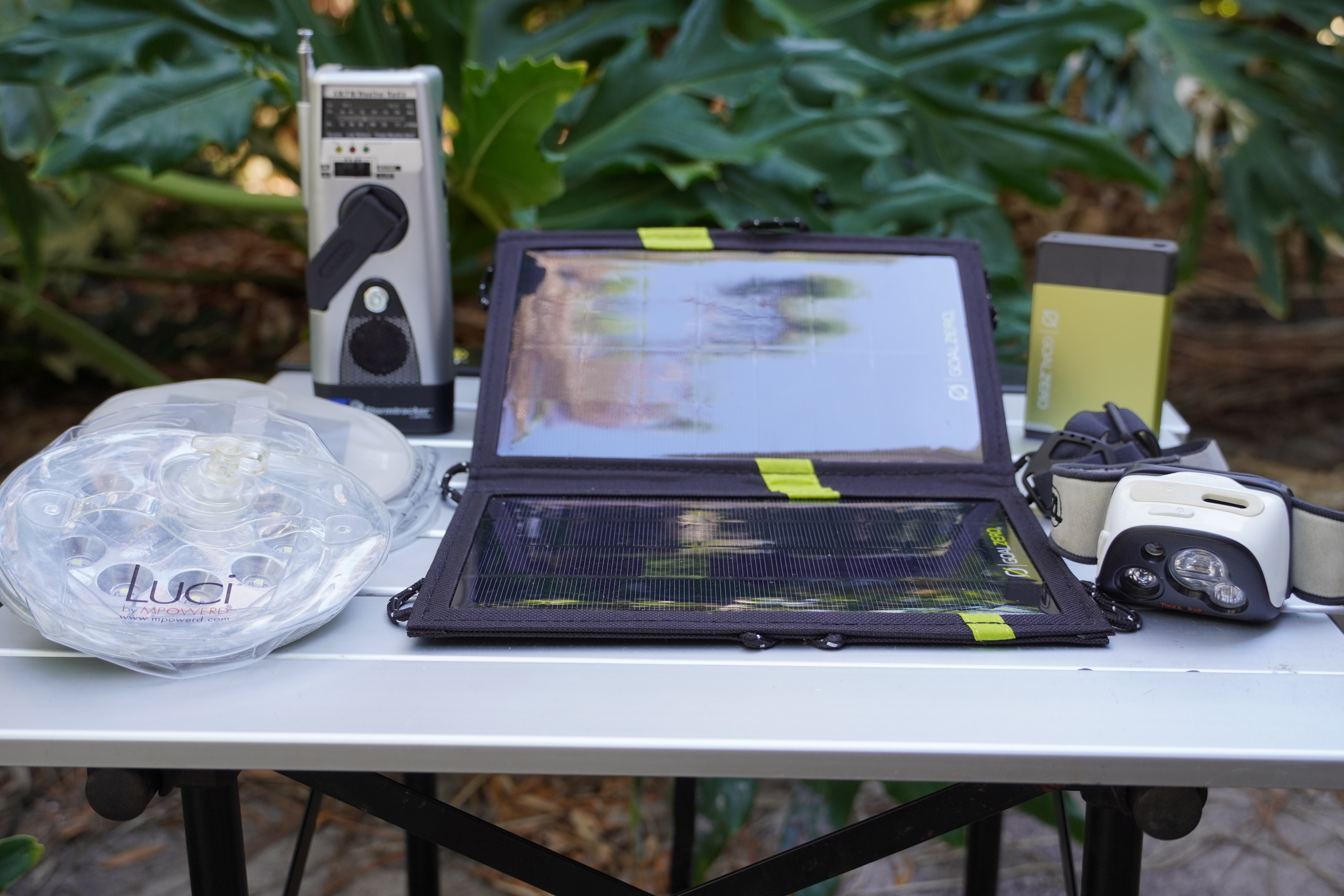
Charge batteries before the storm. Solar output varies with sunlight, cloud, placement, temperature, and equipment. A small panel or radio crank may provide very limited phone charging. Measure what your own equipment can supply. Do not count on full advertised panel output all day, and do not go outside during unsafe conditions to recover a panel.
Light without a flame
Use LED lanterns and headlamps, with lighting accessible to each person. Test a full evening and count seven nights of battery use. Keep exits clear. Follow charging instructions, protect equipment from floodwater, and stop using damaged, swollen, or overheating batteries. Do not charge a wet device or damaged battery.
Medical power comes first
Arrange a plan with the equipment supplier and clinician for powered medical equipment. Include runtime, necessary settings, replacement supplies, transport, and a destination with dependable electricity. Do not interrupt treatment to test an improvised power system.
Use battery lighting. Run portable generators outdoors at least 20 feet from doors, windows, and vents, with exhaust directed away from occupied buildings. Never operate them in homes, garages, enclosed porches, or other enclosed spaces, even with openings raised. A CO alarm does not make an unsafe location safe. Follow CDC outage guidance and the manufacturer’s instructions. If an apartment has no compliant operating location, arrange battery power or relocation instead.
Use portable camp stoves, charcoal grills, alcohol burners, solid fuel stoves, and fuel lanterns outdoors according to their manuals. Never use them in a home, tent, vehicle, or enclosed shelter, and never use cooking equipment to heat a room. Wait for safe outdoor conditions. A meal that needs no flame belongs in every storm pantry.
Stay informed without becoming another emergency
Avoid unnecessary travel after the storm. Follow official access and evacuation instructions. Leave an unsafe location when advised or when medical needs require assistance; staying put is not a rule that overrides danger. Do not drive through floodwater or enter damaged buildings to inspect equipment.
Practice one safe evening
Try a planned pantry supper, battery lighting, radio reception, paper contacts, handwashing setup, and packing the departure bag. Keep refrigeration and essential medical equipment operating. Do not shut off utilities or interrupt medical care as a drill. Measure water, fuel, and battery use under safe conditions, record what failed, and replace consumed supplies.
Give every household member a task suited to their ability. Check the plan before hurricane season, after using supplies, and whenever medicines, household members, or destinations change. A comfortable chair and a confident expression do not count as inventory.
See USFA battery safety guidance for charging and storage precautions. A quiet radio, working headlamp, and written plan beat a dead screen with excellent specifications.
Keep learning: the Florida preparedness reading guide
Start with the household plan, then work through the practical skills. These companion articles connect FloridaOATS and Liquid Rhythm Kayaking.
- Household planning, evacuation, sanitation, and lessons from COVID
- Seven day quantities and a practical household equipment check
- Packing for evacuation and vehicle travel
- First aid supplies, prescriptions, and household illness
- Safe meals when the lights go out
- A seven day pantry menu and food storage
- First aid when help is delayed
- Assessing hazards after the storm
- The limits of flame lanterns
- Using the MSR Dragonfly safely
- Fire blankets, extinguishers, and escape
- The original Hurricane Calm plan, revised
- The responsibility behind staying calm
- The FloridaOATS hurricane archive introduction


7 Comments