
Preparedness and safety review: October 25, 2026. This is household planning guidance. Follow current local emergency instructions, product labels, and individual medical advice.
A first aid kit helps with immediate care. Seven days of household readiness also requires safe water, food, sanitation, suitable shelter, and a way to obtain medical help. This list is a practical starting point to customize, not a promise that every emergency can be treated at home.
Core supplies
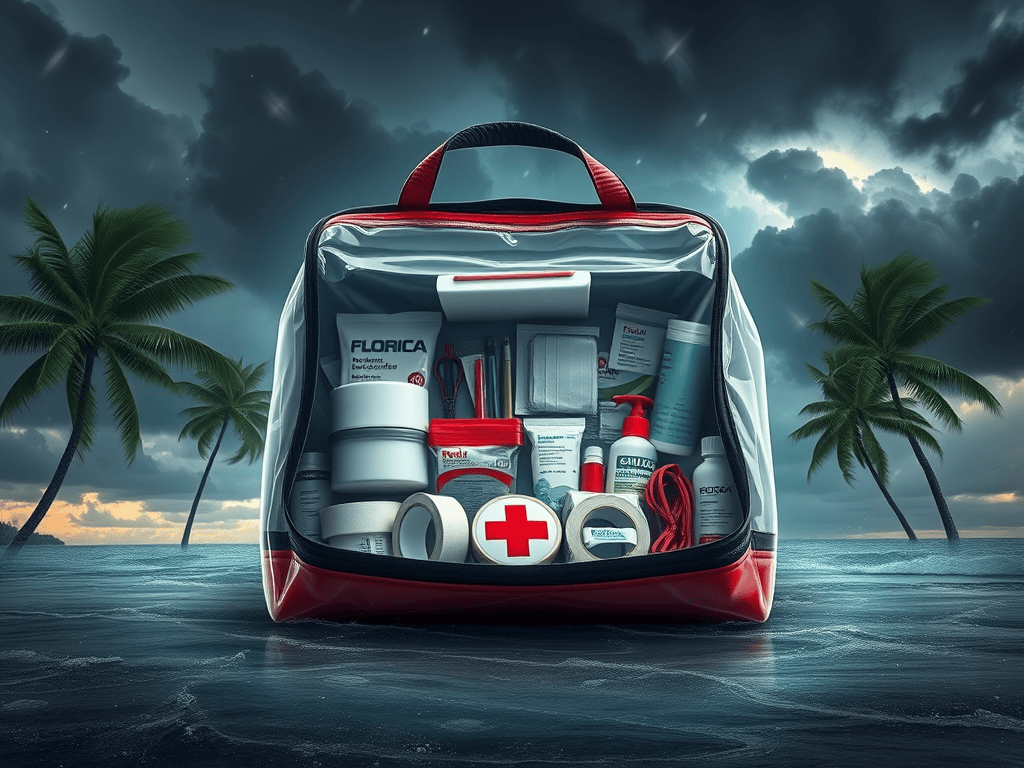
- Assorted adhesive dressings, sterile gauze pads, rolled gauze, medical tape, nonadherent dressings, and elastic wraps.
- Several pairs of nitrile gloves, blunt tipped scissors, tweezers, a digital thermometer, and a current first aid reference.
- A wound irrigation syringe and enough safe water to clean minor wounds. Soap for surrounding skin and handwashing. Do not pour alcohol, hydrogen peroxide, or concentrated antiseptic into a wound.
- Triangular bandages and a suitable splint if trained. A headlamp, spare batteries, waterproof notepad, and pencil.
- A genuine commercial tourniquet and pressure dressing when trained in severe bleeding control. Keep practice equipment separate from supplies intended for emergency use.
- A dry protective container stored above likely flood levels. A dry bag helps protect supplies but does not guarantee sterility after submersion.
Prescriptions and personal medical needs
Florida’s disaster checklist recommends a two week minimum supply of medication. Work with the pharmacist or clinician on refills, legal limits, expiry dates, and storage. Include medicines and supplies actually prescribed to household members, such as inhalers, epinephrine, insulin, and glucose monitoring equipment when applicable. Keep names, doses, allergies, and prescriber contacts on paper.
Waterproof packaging does not protect medicine from excessive heat. Follow the individual label for refrigeration and temperature limits. Arrange a thermometer and dependable cooling where required, with backup power or relocation. Do not store the main medicine supply in a hot vehicle.
Over the counter medicines need instructions
- Choose pain or fever medicines appropriate to each person’s age, health conditions, and other prescriptions. Keep original labels and dosing devices. Avoid duplicate ingredients in combination products.
- Antihistamines may help mild allergy symptoms. They do not replace prescribed epinephrine for anaphylaxis. Use the person’s emergency action plan and obtain emergency help for a severe reaction.
- Antidiarrheal medicine does not prevent flood related infection. Use only when appropriate under the label or clinical advice. Bloody diarrhea, fever, significant dehydration, or persistent symptoms need medical assessment.
- Pack oral rehydration solution and follow its exact mixing directions with safe water. Routine sports drink powder and medical oral rehydration solution serve different purposes.
- Do not treat aspirin as a medicine for every episode of chest discomfort. Call 911 for suspected heart attack and follow dispatcher or clinician instructions.
Florida heat, water, and household illness
Add suitable insect repellent, sunscreen, protective clothing, soap, hygiene supplies, masks suited to the wearer, tissues, and any appropriate current tests. Include care instructions for children, older adults, pets, and a household member who becomes ill. Keep toilet supplies separate from the medical kit.
Store at least one gallon of safe water per person per day as a planning baseline. Seven days for three people means 21 gallons. Add water for pets and additional needs such as heat, illness, food preparation, and washing. Do not assume the baseline covers every task. Use food grade containers, label storage dates, and follow CDC storage and rotation guidance. Do not store the entire reserve where flooding could contaminate it.
A backpacking filter is not a universal storm water treatment system. Ordinary filters do not desalinate seawater and may not remove viruses. Boiling, disinfecting, and ordinary filtration cannot make water contaminated with fuel or toxic chemicals safe. Use another safe source. Follow CDC emergency water guidance and the exact local advisory; a boil water notice and a do not use notice require different actions.
Know when the house is too hot or medically unsuitable
Choose a destination with dependable cooling and transport before the outage. Check on older adults, infants, people with chronic illness, and anyone unable to recognize or communicate distress. Rest, shade, drinking water, and cooling measures help, but a fan or damp cloth is not a guarantee against heat illness. Follow CDC heat guidance; fans can be inadequate or harmful in very hot conditions. Confusion, collapse, or suspected heat stroke requires emergency help and prompt cooling.
Florida’s disaster checklist calls for a two week minimum medication supply. Arrange refills with the pharmacist or clinician, subject to legal, insurance, and prescription limits. Follow each medicine’s storage instructions. Plan safe cooling for medicines that require it, glucose monitoring supplies where needed, and backup power or relocation for medical devices. Never ration essential treatment to make a kit last longer.
The generator is not an apartment appliance
Use battery lighting. Run portable generators outdoors at least 20 feet from doors, windows, and vents, with exhaust directed away from occupied buildings. Never operate them in homes, garages, enclosed porches, or other enclosed spaces, even with openings raised. A CO alarm does not make an unsafe location safe. Follow CDC outage guidance and the manufacturer’s instructions. If an apartment has no compliant operating location, arrange battery power or relocation instead.
Use portable camp stoves, charcoal grills, alcohol burners, solid fuel stoves, and fuel lanterns outdoors according to their manuals. Never use them in a home, tent, vehicle, or enclosed shelter, and never use cooking equipment to heat a room. Wait for safe outdoor conditions. A meal that needs no flame belongs in every storm pantry.
Know when the kit is not enough
Call 911 for severe bleeding, difficulty breathing, chest pain, suspected stroke, severe allergic reaction, confusion, or another immediate threat. Do not delay seeking care because responders may be busy. Avoid floodwater. Obtain prompt assessment for deep or contaminated wounds and rapidly worsening pain, redness, swelling, fever, or blisters, particularly after water exposure. Check tetanus protection with a clinician.
For treatment priorities and documentation, read First Aid After the Storm. Practice first aid, CPR, and bleeding control in a recognized course. Check quantities and expiration dates before hurricane season and after every use. Training is what turns the box of supplies into useful help.
Keep learning: the Florida preparedness reading guide
Start with the household plan, then work through the practical skills. These companion articles connect FloridaOATS and Liquid Rhythm Kayaking.
- Household planning, evacuation, sanitation, and lessons from COVID
- Seven day quantities and a practical household equipment check
- Packing for evacuation and vehicle travel
- Weather information, lighting, and backup power
- Safe meals when the lights go out
- A seven day pantry menu and food storage
- First aid when help is delayed
- Assessing hazards after the storm
- The limits of flame lanterns
- Using the MSR Dragonfly safely
- Fire blankets, extinguishers, and escape
- The original Hurricane Calm plan, revised
- The responsibility behind staying calm
- The FloridaOATS hurricane archive introduction


Leave a Reply