
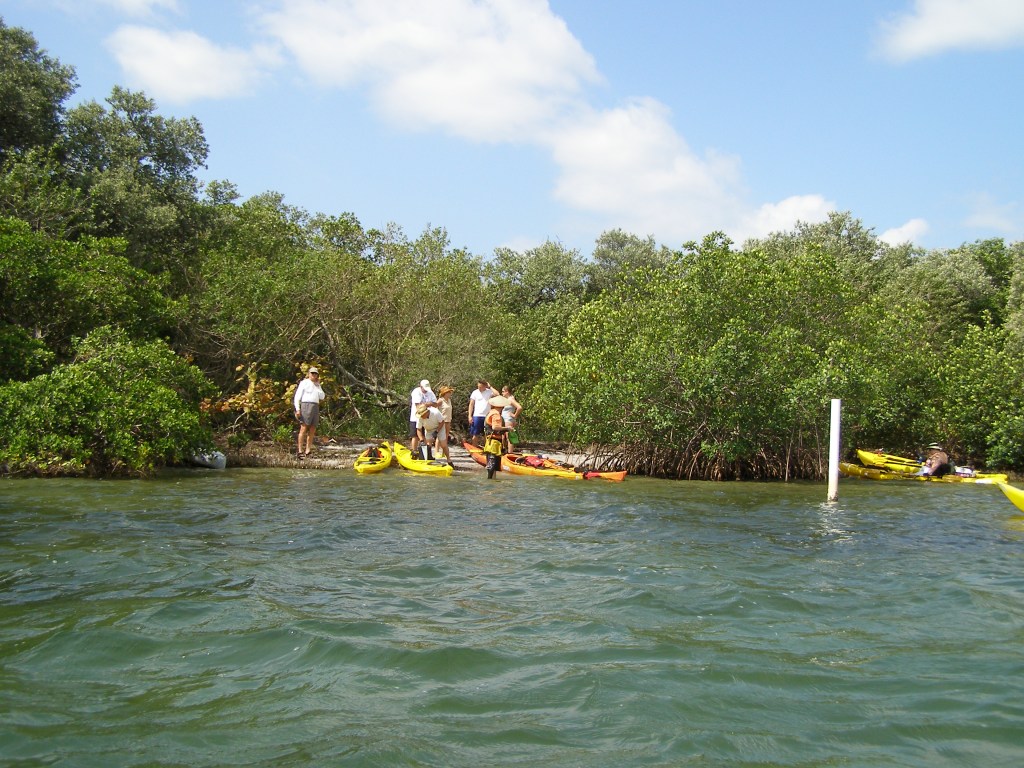
When somebody calls about a kayaking lesson, I ask what water calls to them. Where are they planning to paddle? Do they picture mornings on a sheltered bay, evenings along the mangroves, or water that becomes more challenging when the weather changes? Before choosing a class, I want to understand where they hope to go.
Their answers guide the arrangements. We settle the lesson goals, choose a suitable location, work out the equipment, and agree on a date. I teach on Sundays, but an open Sunday on the calendar does not tell me whether the lesson will work. The student, boat, water, and conditions have to work together.

A two hour class can involve roughly ten hours of my time altogether. That is my estimate for delivering a class, including the instruction, conversations, weather checks, loading, driving, setup, cleaning, putting equipment away, and washing the truck. The truck gets its share of Florida, too. Someone starting an outdoor business needs to account for that whole undertaking when setting a price.
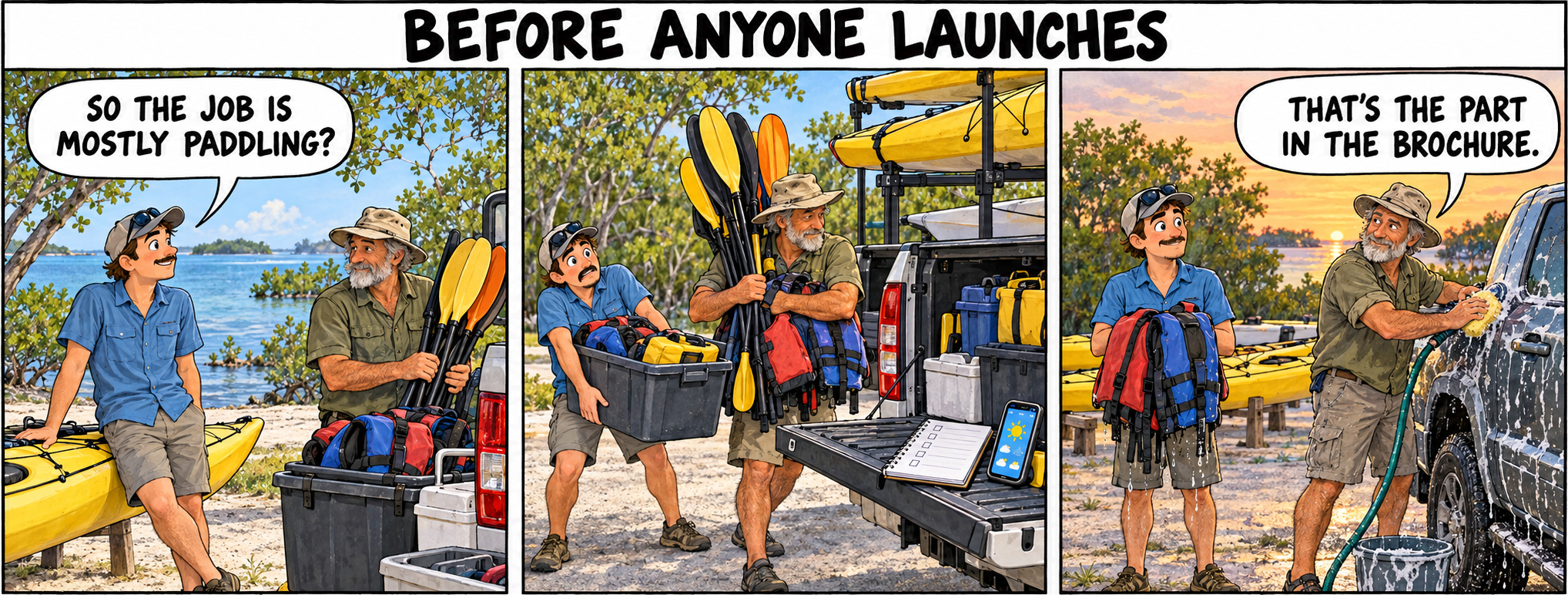
I keep arrangements in email and a notebook. I need to be able to return to what the student wants to learn, what we have agreed upon, and which equipment will be needed. Remembering a conversation is useful. Having a record is better when you are loading boats and trying to get out the door.
By the time we reach the water, I have often spent a good hour talking with the student. We cover footwear, clothing, drinking water, where to meet, and what to expect physically. That conversation gives me a better understanding of the person I will be teaching. It also gives the student time to ask questions before standing beside a kayak with everyone ready to launch.
I suggest movements and stretches they can explore at home to become familiar with rotation, within their comfort and any existing restrictions. There is something useful about beginning a paddling lesson in the living room. A student can pay attention to movement without also wondering what the boat is about to do.
Many students expect kayaking to demand a strong grip and powerful arms. They are surprised by how much sound technique and reading the water can reduce unnecessary effort. Physical demands vary with the paddler, boat, and conditions, but trying harder is not always the answer. Sometimes the useful lesson is learning to stop fighting the equipment.
I have worked with students with amputations, spinal fusions, and people recovering from strokes. I ask about spinal and joint health, height, and shoe size because those answers help me understand fit, comfort, and movement. I listen to what the student says they can do and respect the restrictions they bring. Then I consider which boat and approach will support the lesson.
Owning several kayaks does not mean I own the right kayak for every student. Foot room matters. Seating matters. Getting into and out of the boat matters. Their answers and intended paddling help me decide whether one of my boats will work or whether I need to obtain another. That decision belongs in the planning, while there is still time to make arrangements.
In Before You Sell the Adventure, Learn What the Boat Can Do, I wrote about learning the differences between the Ocean Kayak Yak Board and Prowler 13 through time on the water. A guide needs that familiarity with the equipment being assigned. A boat may be capable of doing something while still being a poor choice for teaching a particular person to do it.
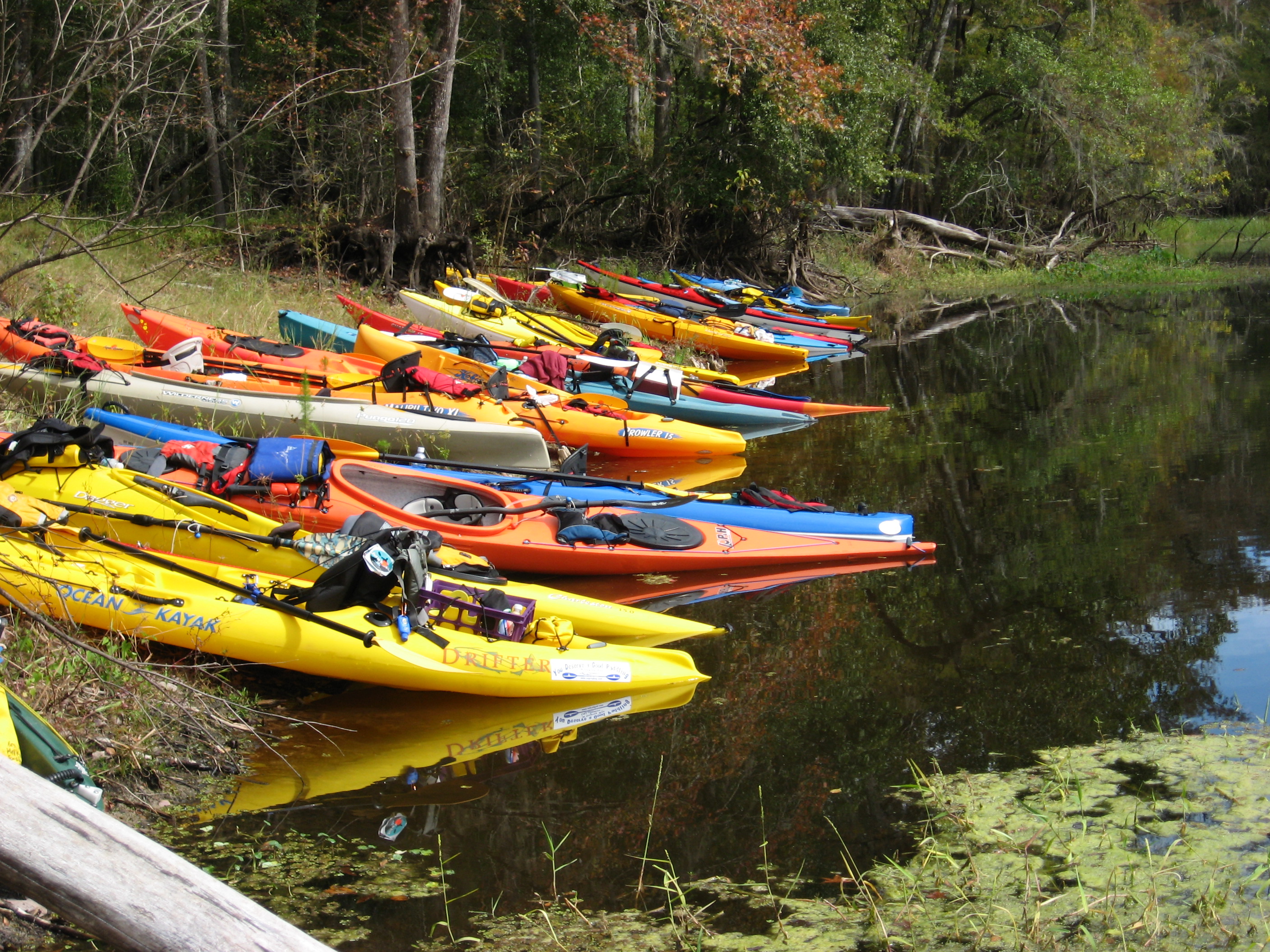
Buy instructional equipment for its purpose, fit, durability, and upkeep. The most expensive option will not automatically improve the lesson, although a particular fit or adaptation may justify the expense. Students are still learning how to handle boats and paddles. Teach them how to care for what they use, and allow for maintenance and replacement in the business budget. You cannot expect a beginner to arrive with all the habits you acquired over years.
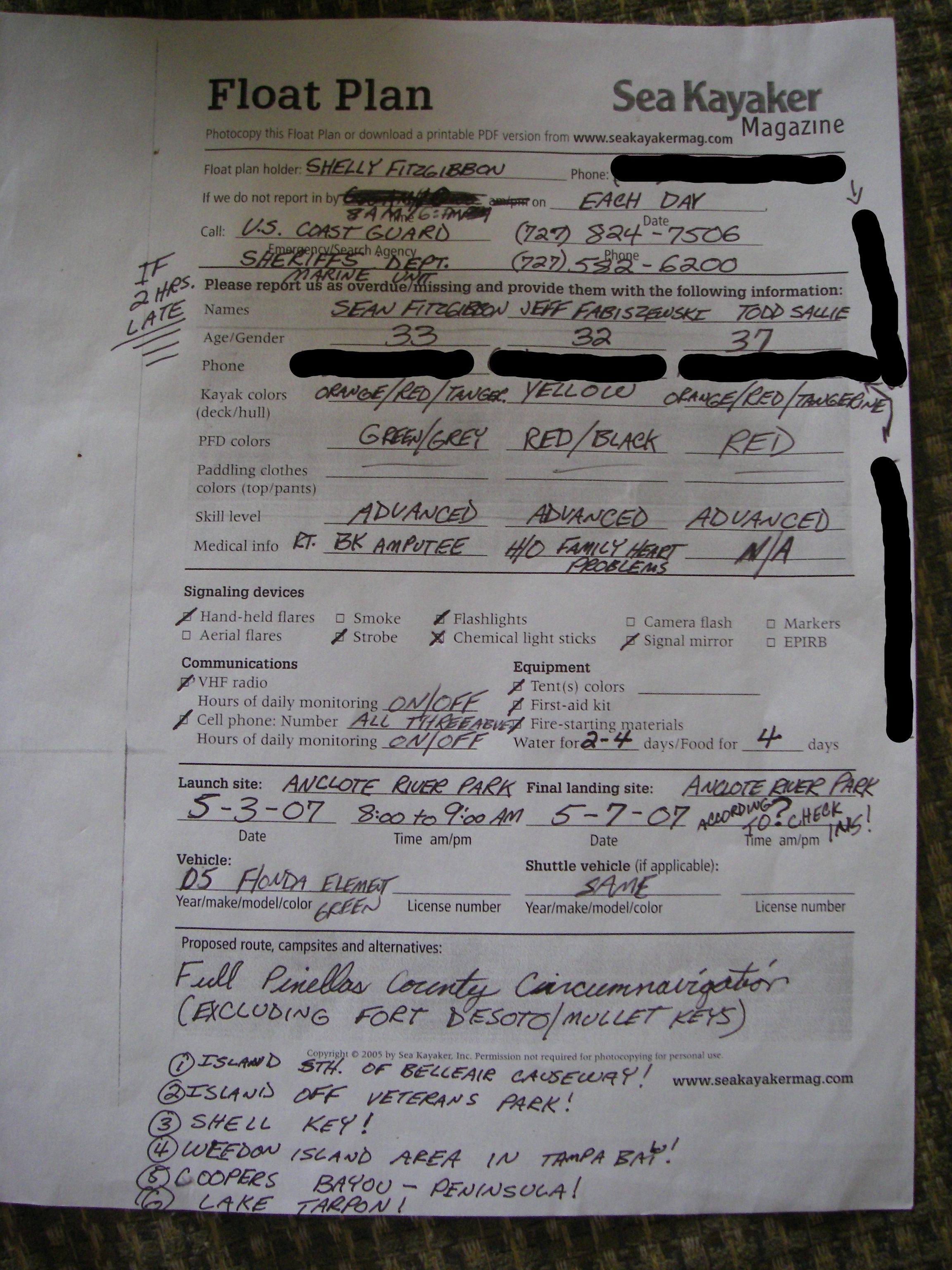
Sean Fitzgibbon and I learned the importance of documentation while working with Osprey Bay Outdoors. Other people handled bookings, so we created frequently asked question documents for the weekend trips and classes. The person speaking with a customer and the person leading the activity needed to be working from the same information. Otherwise, the guide could discover a misunderstanding at the launch, with boats unloaded and the customer expecting something else.
Two weeks before a guided trip, we would paddle the location and look at parking, the boat ramp, and water conditions. That gave us time to spot problems and adjust arrangements. It also reminded us to examine the place as instructors responsible for a group. Where would people unload? What would they encounter getting to the water? What needed explaining before they arrived? All of these things we would add to a Float Plan that we would leave with the shop and have a digital copy available for our guests.
Experienced paddlers can forget how much they have become accustomed to. Wet feet, bright sun, bugs, and slippery surfaces may seem ordinary to us. A new paddler is entitled to know what the day will involve. Those details affect comfort, attention, and enjoyment. A person who is already uncomfortable before launching has more to manage while trying to learn.
An advance visit cannot tell you what conditions will be two weeks later. I check weather every day as a class approaches and continue assessing conditions right up to leaving the shoreline. I have rescheduled classes because of weather and changed meeting places because of boat ramp maintenance or unexpected water hazards. The location has to remain suitable for the instruction we intend to provide.
When a student has taken time away from work and the original location will not provide a good learning experience, I look for another suitable place. Changing the location means making sure the student knows where to go and understands the revised arrangements. If there is no suitable alternative, the class needs another date. Having a contingency plan means knowing what you can reasonably change and when you need to stop.
I have not had a student challenge a decision that conditions would prevent a good lesson. I explain the situation, discuss the available options, and work with them on the arrangements. I take payment on the day of class. That is my current practice, and it belongs among the details we settle beforehand.
The business advice I would give a new instructor is plain: price your work without expecting a tip. A tip is welcome, but the class fee needs to cover the labor and expenses required to deliver the class. Count the preparation, transportation, cleaning, and equipment costs. Enjoying the work does not pay for them.
Adding students can increase income, but too many reduce the attention each person receives and can take the fun out of learning. Decide how many people you can teach well. My private instruction page describes the value of concentrating on one paddler’s goals. Whatever the format, the arrangements should leave enough room to teach the people who actually arrive.
If you want to guide or own an outdoor business, give this work a place in your schedule and your prices. The student may remember a first good turn, an easier stroke, or the pleasure of moving across the bay. Your job began well before that, and it will continue after the last boat comes out of the water.


Leave a Reply