Bushcraft and paddling meet when the boat carries the camp. The point is not only to move a tarp, hammock, and cook kit from the truck to the shoreline. It is to make sound choices about the boat, the campsite, the fire, and the food. Learn traditional fire skills where fires are allowed, find and identify local foods responsibly, and cook a satisfying meal with a small kit and limited supplies. A canoe or kayak is not a backpack with a different shape, and a riverbank is not ours to alter because we reached it.
This program is for bushcraft and overlanding enthusiasts who want to carry camp skills onto rivers and coastal water, and for paddlers who want a more capable shore camp. It joins boating judgment with primitive fire building, responsible Florida food finding, and camp cooking that makes limited supplies count. Future event bookings are by request and shaped to the host site, audience, and conditions.
What participants will learn
- Which camp skills carry over from land travel, and which require new practice on the water.
- How boat choice, load placement, weather, route, landing, and group ability shape a trip plan.
- How to choose a permitted campsite, follow local rules, and leave the shoreline without new damage.
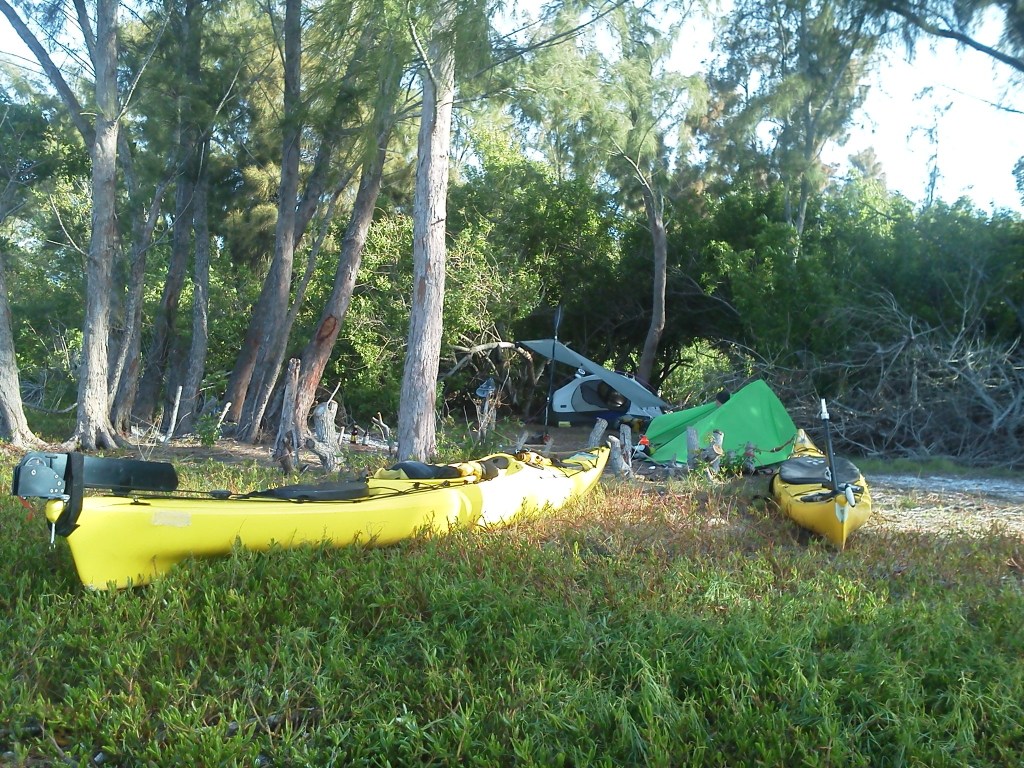
- How shelter, fire, and camp kitchen choices change when every item must travel in the boat.
- How to plan a satisfying camp meal with limited ingredients, fuel, water, and cooking equipment.
- How to assess local food sources, identify plants carefully, and follow land manager rules before gathering anything.
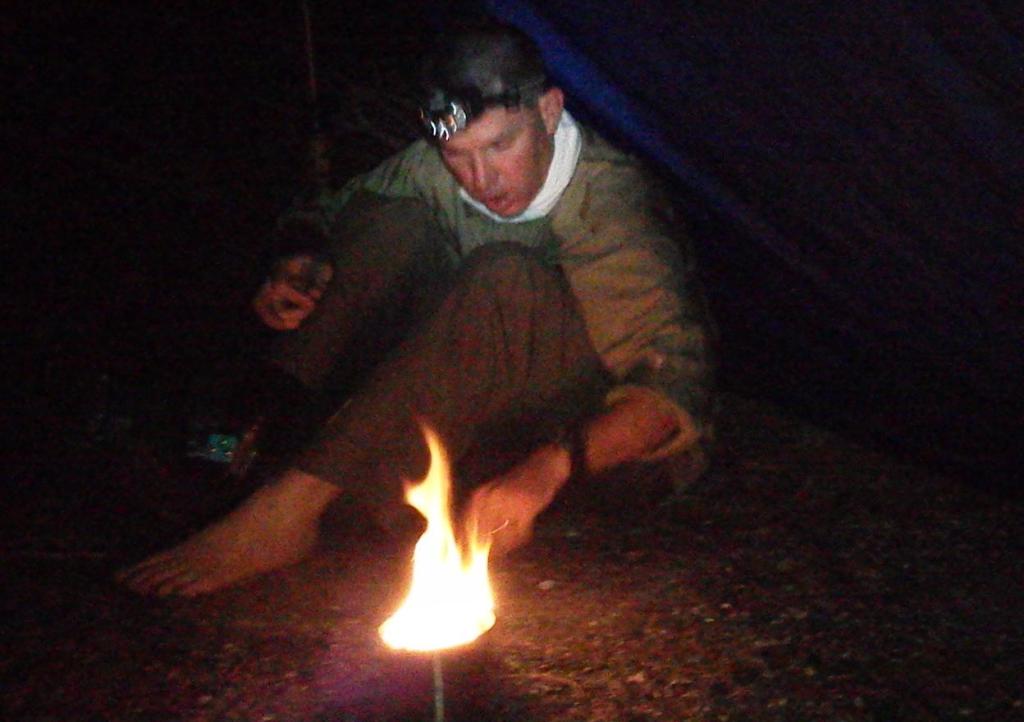
- How to choose a traditional fire method only when fire is permitted and can be managed without damaging the site.
- Why boat control, capsize recovery, and sound judgment in changing conditions require suitable paddling instruction.
The goal is practical skill, not campsite construction. Participants learn to use a permitted site with a light touch, make careful choices about fire and wild foods, and carry the paddling skills needed to reach camp and return safely.
Event formats
From Trail to Tide: an illustrated talk
45 to 60 minutes. Indoor room, pavilion, or shaded event space. A visual talk about moving camp from a vehicle or trail to a canoe or kayak. Along with boat choice, load planning, route and landing decisions, we examine what makes a traditional fire appropriate, how to approach local food finding responsibly, and how to turn a modest camp kitchen into a good meal. The talk includes questions and works well for a general event audience.
The Camp Travels: a shore based workshop
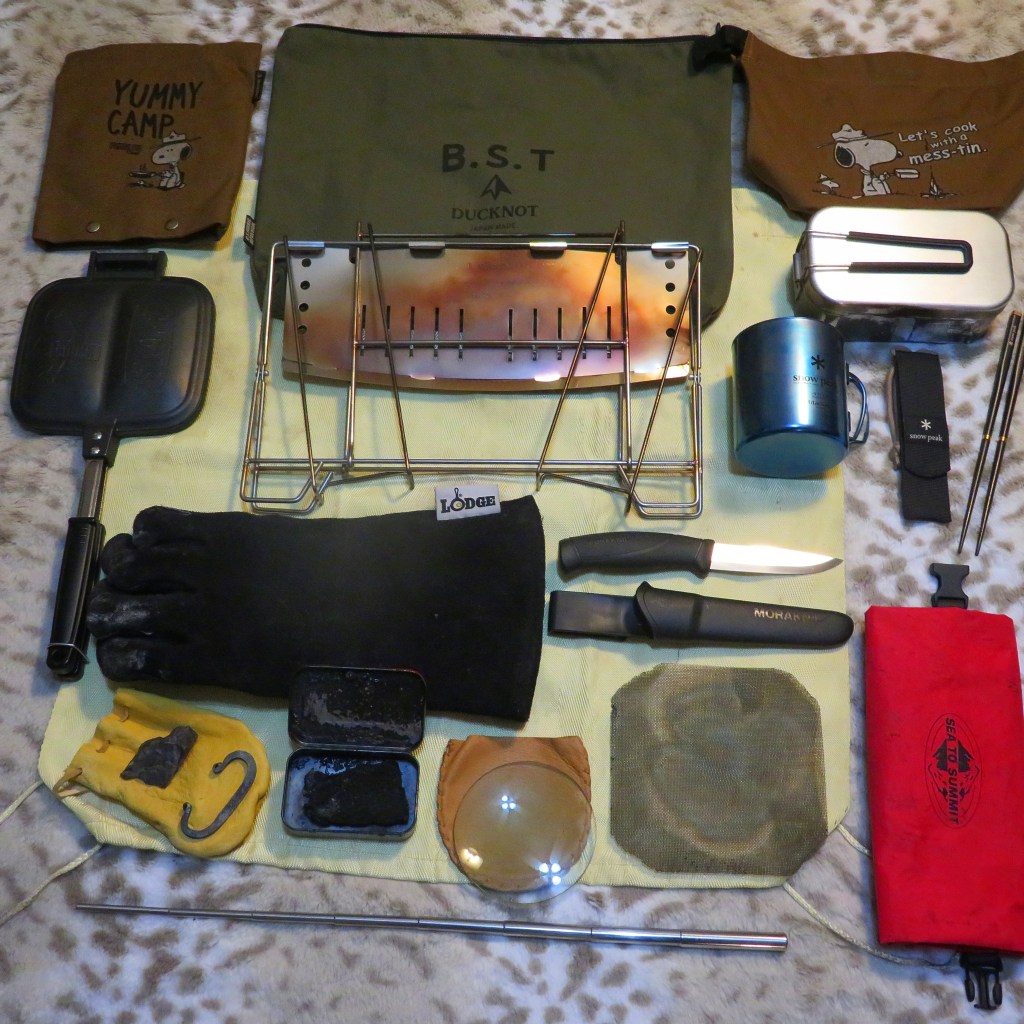
60 to 90 minutes. Classroom, pavilion, or suitable outdoor demonstration area. Participants work through a water trip plan, then see how a compact tarp and hammock camp, a small cook kit, and a traditional fire plan fit the boat and the site. The food portion focuses on finding and identifying local foods responsibly, then planning a satisfying meal with limited ingredients and equipment. Any fire demonstration depends on host approval, local rules, weather, and a suitable fire area. Gathering wild foods takes place only where it is lawful and permitted. The session also covers load organization, legal camping, weather, and access limits.
Kayak skills for the journey
Up to 2 hours. Suitable protected water, with agreed participant prerequisites and a site specific safety plan. A practical kayak session shaped to the group and conditions. We can work on boat control and paddling skills that support confident day travel and future camping trips. This is kayak instruction, not a bushcraft certification. Canoe specific on water instruction needs a suitable canoe instructor and should be arranged with the event host.
Event formats are adjusted to the audience, venue, equipment, and time available. Fire and food demonstrations follow the site rules and permissions. An on water session is offered only when the site, weather, group ability, and safety arrangements make it appropriate.
Experience behind the lesson
I am Jeff Fabiszewski, a Tampa Bay based kayak instructor and expedition paddler. My professional paddling work began in 2001. My qualifications include ACA Level 3 Coastal Kayaking Instructor, Wilderness First Responder training through NOLS Wilderness Medicine, Wilderness First Aid instruction, and Leave No Trace training.
I have taught at the East Coast Canoe and Kayak Festival and presented expedition lessons at the Sweetwater Kayak Symposium with Sean Fitzgibbon. Sean and I also led lecture and campout programs at Osprey Bay Outdoors, including sessions on camping from a kayak and cooking while kayak camping. The archive links below show examples of that work.
When Sean co teaches, he leads primitive Florida fire building and food finding. He has completed the UF/IFAS Florida Master Naturalist Program course in Environmental Interpretation, a 24 contact hour course. I focus on boat travel, camp cooking, and the choices that make a water camp work. We shape the split to the event and only teach within our qualifications and the site rules.
My teaching draws on years of instruction and travel on Florida rivers, bays, and coastal waters. The lesson stays within the skills, qualifications, and conditions that can be responsibly managed.
Read the related field notes
- Water Travel and Bushcraft: Taking Camp Skills by Canoe or Kayak, a FloridaOATS reading guide.
- Overland Meets Bushcraft: Preparedness and Responsibility.
- Shelter Setups That Blend Speed and Safety.
- Camping From a Kayak or SUP: Carrying a Temporary Home.
- Camping from your kayak: an Osprey Bay Outdoors lecture.
- Cooking while kayak camping: a lecture and campout.
Bring the program to your event
If you are planning a bushcraft gathering, paddling event, outdoor education program, or club meeting, tell me about the audience, venue, date, format, and budget. We can work out a lesson that fits the event and the people attending.
For current classes, speaking, podcast interviews, and writing assignments, visit Work With Jeff.

