
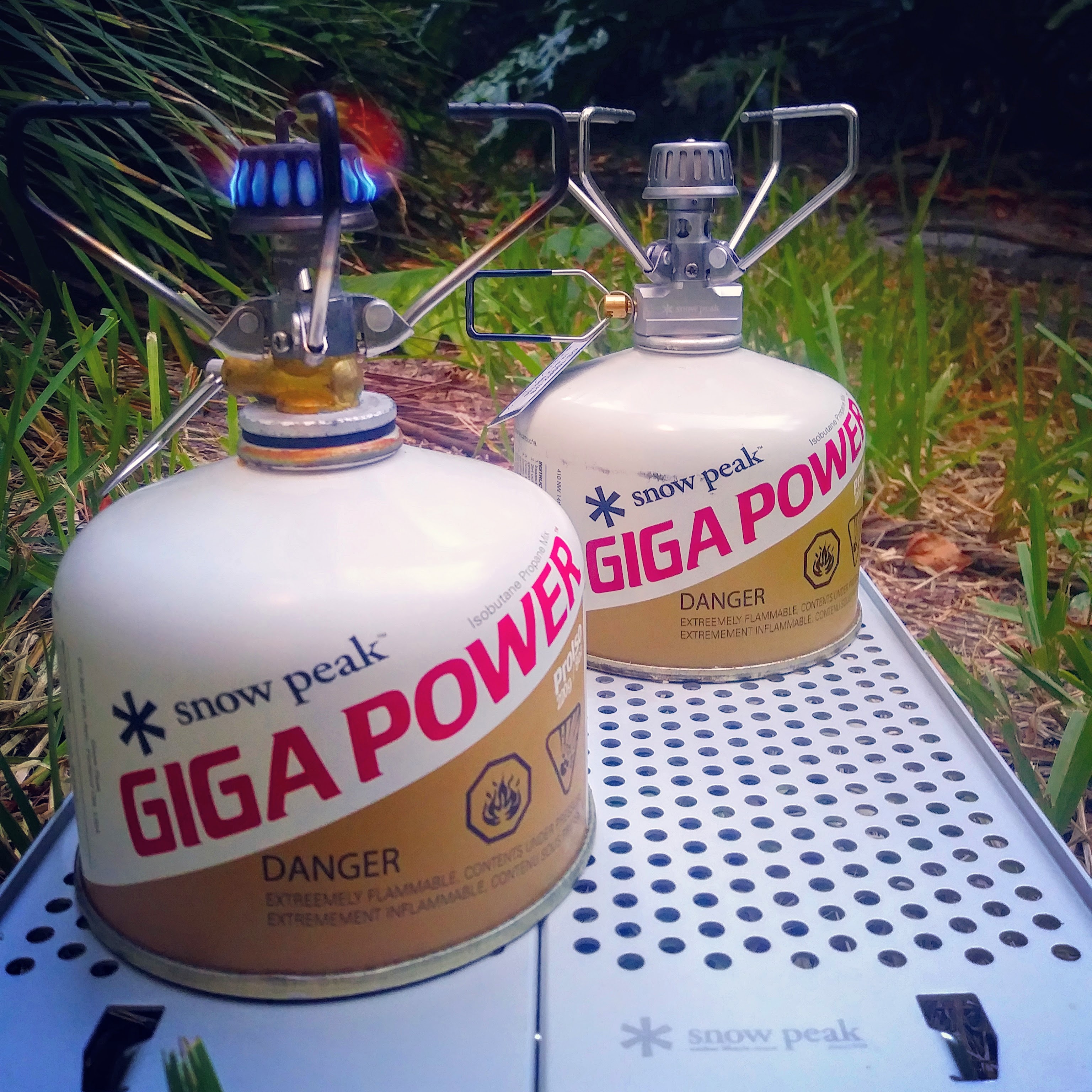
A compact cooking tool, with operating limits worth learning before the next launch.
I bought my first Snow Peak GigaPower in 1998 after my brother accidentally drove over the dry bag containing my MSR Dragonfly. An overnight trip with Sean Fitzgibbon was approaching, so I needed another stove. MSR repaired the Dragonfly about a month later. The GigaPower stayed in my kit.
That is the purchase history. The useful question for a paddler now is whether this style of stove suits the cooking, cookware, fuel supply, and conditions of the proposed trip.
Identify the model first
My original stove was a manual ignition version. Do not assume its specifications match a later replacement. Snow Peak lists the current GS-100R2-US Manual Renewed at 75 grams, with four folding pot supports and stainless steel, aluminum alloy, and brass construction. Those are current model specifications, not an identification of the stove bought in 1998.
The manufacturer also offers an Auto version. Check your model’s instructions for its ignition method. The earlier article’s blanket claim about titanium stove components was unsupported and has been removed. Titanium cookware does not establish the material of the burner beneath it.
Set up and operate deliberately
Read the instructions for your exact model. In Snow Peak’s GS-100R instruction sheet, Snow Peak specifies outdoor use, designated fuel canisters, an upright connection, fully opened supports, and a closed valve before attachment. Never force a connection.
For manual lighting, the sheet directs lighting the match or lighter before slowly opening the valve. If ignition fails, shut off the gas before retrying. Adjust gradually. After use, confirm extinction, let the stove cool, then disconnect and cap the canister.
Check the connection seal before each use. Damage, wear, or unexplained leakage means stop and seek service. These points summarize the linked model’s instructions; obtain the matching manual for an older stove rather than assuming every detail transfers.
Cookware and the meal
A compact burner is convenient to pack, but the complete cooking arrangement needs assessment. A loaded pot raises the center of gravity. A long pan handle changes balance. Plan a stable site and keep the cooking area clear of passing feet and loose equipment.
The linked GS-100R sheet limits pot diameter to 14 centimeters and excludes Dutch ovens. Check the exact model’s other cookware limits before choosing a pan or mess tin. A recipe photograph does not override them.
Try the intended meal and cookware before departure. Notice how readily the food scorches, whether stirring disturbs the pot, and how much fuel the actual meal uses. Those observations are more useful than treating a quoted boil time as a complete expedition fuel plan.

Wind protection and burner pads
My earlier recommendation to add a simple windscreen was too broad. Snow Peak offers a purpose made GigaPower Windscreen. Confirm compatibility and follow its instructions. It is different from enclosing the stove and canister in an improvised barrier.
Cascade Designs warns that putting a fuel canister inside a windscreen can overheat it and cause leakage or explosion. If the conditions prevent safe operation, change the cooking arrangement or the meal. Do not try to overcome wind by trapping heat around the fuel supply.
The historical photograph shows a burner pad purchased from Japan. I have not established manufacturer approval for that pad with this GigaPower and cookware combination. I withdraw any implication that the photograph demonstrates a recommended setup.
Care after the trip
Let the stove cool and follow its cleaning instructions before packing. The linked Snow Peak sheet specifically warns against spraying water into the burner. Seek manufacturer guidance for salt contamination or a persistent fault rather than flushing or dismantling the stove on guesswork.
Protect the stove from crushing in transit and keep its instructions with the equipment record. Inspection, drying, and a functional check before the next trip matter more than calling a stove indestructible.
An emergency kit still needs a safe cooking site
The GigaPower is not an indoor power outage cooker. CPSC warns that camping stoves used inside tents, campers, and vehicles can cause fatal carbon monoxide poisoning. Use this outdoor stove outdoors, away from building openings and combustible materials, as its instructions require.
Do not cook outside during dangerous storm conditions to preserve a hot meal. Include food that needs no cooking in emergency planning.
For this stove, my aim is straightforward: suitable cookware, controlled heat, approved equipment, and a user who can recognize when to stop. A dependable supper begins with those decisions.
Jeffrey John Fabiszewski
Primary references and companion reading
Sources reviewed October 22, 2026: Snow Peak’s GS-100R instruction sheet; Snow Peak’s linked Manual Renewed, Auto, and GigaPower Windscreen product pages; Cascade Designs’ windscreen safety explanation; and CPSC’s camping equipment guidance. The manual linked here covers GS-100R and is not proof of the exact specifications of my 1998 stove.
Read The Gear That Endures for a broader equipment care and handover routine. FloridaOATS’ A Stove for Every Generation tells the family story of passing the original stove to my son in 2021.


3 Comments