
LIQUID RHYTHM KAYAKING · YOUTH PADDLING
Small games. Lasting skills.
Eight canoe and kayak games for children, families, camp staff, and youth leaders. Build confidence one thoughtful stroke at a time.
Play with a purpose.
A child trying to reach a floating ball is practicing steering. A crew carrying a cup of water learns that smooth strokes matter. Games give a skill somewhere to go, and they leave room for the pleasure that brought us to the water in the first place.
These activities draw on a CanoeKids handout I received from Derek Hutchinson during our East Coast Canoe and Kayak Festival class. I have adapted the material for this resource. Receiving it from Derek does not establish that he wrote it; the supplied copy does not identify its original author or publication date.
The original activities were generally intended for ages 7 to 12. Readiness, boat fit, swimming ability, confidence, and supervision matter more than a birthday. Older beginners can enjoy these games too.

Before you launch
These are supervised teaching activities, not directions for children to practice alone. Begin with a qualified paddling instructor who can assess the site and perform rescues for the boats being used.
- Choose sheltered water with easy access to a safe landing, away from boat traffic, current, surf, and entanglement hazards. Assess depth and underwater conditions; shallow water is not automatically safe.
- Every paddler and supervising adult wears a properly fitted Coast Guard approved life jacket suitable for the person and activity. Follow the label and check fit before launching.
- Use boats and paddles that fit the children and stay within the manufacturer’s capacity. Practice entering, exiting, stopping, and responding to a capsize before beginning games. Do not introduce spray skirts through these activities.
- Establish boundaries, clear stop and regroup signals, and an emergency plan. Assign active supervision and rescue cover appropriate to the group, site, and program requirements. No single staffing ratio fits every setting.
- Check weather, wind, tide, water temperature, heat, and lightning risk. Bring drinking water, sun protection, first aid supplies, and reliable communication. Leave a float plan with a responsible person.
- Keep children seated. No ramming, paddle throwing, grabbing other boats, forced immersion, or elimination for making mistakes. Let a child pause or choose an easier version without embarrassment.
- Count people and equipment before and after every game. Stop when attention, comfort, or conditions deteriorate.
The Coast Guard recommends wearing a suitable life jacket while underway and leaving a float plan. See its life jacket guidance and float planning guidance. The activity controls above are Liquid Rhythm adaptations, not Coast Guard approval of these games.
Eight games worth carrying
Start with one game and leave time to talk about it. Ask what helped the boat turn, what made stopping easier, or why a smooth trip saved more water. The answer is more useful than a score.
- 1. Target Ball
- 2. Treasure Hunt
- 3. Waiter
- 4. Stops and Starts
- 5. Simon Says
- 6. Canoe and Kayak Ballet
- 7. Scatterball
- 8. Hand Paddling
1. Target Ball
The skill: Steering, judging distance, and stopping with control.
Boats and prerequisites: Canoes or stable recreational kayaks suited to the child. Paddlers must already be able to move forward, turn, and stop on command.
Equipment, setup, and time: One large soft floating ball per boat, paddles, fitted life jackets, and a sheltered practice area. Allow 5 to 10 minutes. Establish separate approach lanes with ample stopping room.
How to play
- An instructor places a ball a few boat lengths ahead of each participant.
- Look at the target, paddle toward it slowly, and make small steering corrections.
- Stop with the bow close to the ball. A gentle touch is enough; speed earns no extra credit.
- Retrieve the ball only if it is comfortably within reach. Otherwise, let the instructor reposition it and try again.
Supervision and safety: Run one boat per lane. Keep targets away from docks, swimmers, navigation channels, and wildlife. Do not lean far over the side, stand, ram a target, or chase a drifting ball beyond the boundary.
Make it easier: Use a larger ball over a shorter distance, with an instructor beside the boat.
Optional challenge: Approach from a different starting angle, or stop without touching the ball. Reward control rather than speed.
2. Treasure Hunt
The skill: Observation, maneuvering, communication, and working together.
Boats and prerequisites: Canoes or stable recreational kayaks. Participants need basic turning, stopping, and an understanding of the activity boundary.
Equipment, setup, and time: Several large, numbered floating objects that can be recovered easily, a collection tub at the landing, and standard paddling equipment. Allow 10 to 15 minutes. Count every object before launching.
How to play
- The instructor spreads the numbered treasures within a small, clearly marked area.
- Assign each boat a number or color so several crews do not converge on one object.
- Paddle to the assigned treasure, stop, and collect it by hand while seated.
- Return it to the collection point, then receive the next assignment. Finish by checking that every object has been recovered.
Supervision and safety: Use clean reusable objects, never food, hooks, glass, or natural wildlife as treasure. Do not tie retrieval lines to children or boats. Adults recover anything that drifts outside the boundary; no treasure is worth a chase.
Make it easier: Place one object beside an instructor and let each boat take a turn.
Optional challenge: Give crews a sequence of colors to collect or a simple shoreline clue. Keep collection cooperative rather than a scramble.
3. Waiter
The skill: Balance, smooth strokes, and learning that steady progress can beat hurried paddling.
Boats and prerequisites: Canoes or stable kayaks with a flat place where a cup can rest without blocking the paddler. Participants should be comfortable starting, stopping, and staying seated.
Equipment, setup, and time: A small reusable unbreakable cup, clean water, and a receiving bucket accessible at a stable landing. Allow 5 to 10 minutes. Use a short route with wide turns.
How to play
- Place a partly filled cup on a stable deck surface within easy reach. Do not use a cup that requires a child to reach forward awkwardly.
- Paddle slowly to the receiving point, keeping the boat level and the strokes smooth.
- Stop completely. An adult helps transfer the remaining water into the bucket.
- Return and repeat. Work together to fill the bucket rather than racing another crew.
Supervision and safety: Use reusable cups instead of disposable foam. Keep loose equipment away from feet and exits. Spilled water is part of the game; never lunge after a falling cup. The landing adult manages transfers without pulling a child off balance.
Make it easier: Use less water, a shorter course, or an adult partner in a tandem boat.
Optional challenge: Add one broad turn or compare how much water remains after a smooth trip and a hurried one.
4. Stops and Starts
The skill: Controlled propulsion, stopping strokes, listening, and awareness of other boats.
Boats and prerequisites: Canoes or recreational kayaks. Teach and rehearse the stopping stroke before beginning. Children must understand the start and stop signals.
Equipment, setup, and time: Two conspicuous markers, generous lanes, paddles, and fitted life jackets. Allow 5 to 10 minutes. Agree on clear spoken and visual signals before launching.
How to play
- Line boats up with room between them and a clear area ahead.
- At the start signal, take a few gentle forward strokes.
- At the stop signal, use the practiced stopping stroke until the boat is still.
- Wait for the next start signal. Continue toward the marker, then return under the instructor’s direction.
Supervision and safety: Keep speeds low and lanes separated. Leave generous braking space before the boundary. Use visual cues for children who cannot hear a spoken signal. Reserve emergency signals for emergencies and rehearse what to do if any boat overturns.
Make it easier: Practice one boat at a time over a few strokes.
Optional challenge: Try stopping beside a marker, then add a controlled turn after the boat has stopped.
5. Simon Says
The skill: Attention, posture, blade awareness, and familiar boat control skills.
Boats and prerequisites: Canoes or stable recreational kayaks. Every command must use a movement already taught and appropriate to that boat and child.
Equipment, setup, and time: A calm practice area and normal paddling equipment. Allow 5 to 10 minutes. The instructor demonstrates from a visible position while another adult watches the group as needed.
How to play
- Explain that paddlers follow a command only when it begins with Simon says.
- Begin with simple commands such as sit tall, look ahead, or rest your paddle across your lap.
- Add familiar actions such as two forward strokes, stop, or turn toward a marker.
- Pause between commands to regroup. A mistake brings a smile and another try, not elimination.
Supervision and safety: Do not command standing, jumping, closing eyes, releasing paddles, sudden leaning, or deliberate capsizing. Avoid raised blades near other people. Adapt movements for mobility, hearing, and confidence; participation should never require discomfort.
Make it easier: Keep the group stationary and practice posture and paddle placement.
Optional challenge: Combine two familiar movements, allowing enough time and space to complete each one.
6. Canoe and Kayak Ballet
The skill: Linking strokes, planning movement, teamwork, and boat control.
Boats and prerequisites: Canoes or recreational kayaks. Participants must have practiced forward movement, stopping, turning, and any reverse or sideways movement included.
Equipment, setup, and time: Three widely spaced markers in sheltered water, with separate routes for each boat. Allow 10 to 15 minutes. Music is optional and must not interfere with instructions.
How to play
- Demonstrate a short sequence: paddle forward to a marker, stop, turn, and return.
- Let each boat practice slowly with feedback from the instructor.
- Invite pairs or crews to create their own sequence using skills they already know.
- Perform the sequence for the group. Celebrate smooth movement, cooperation, and imagination.
Supervision and safety: Finish seated in the boat. The original handout suggests an optional jump out; that is omitted here. Keep reverse travel short and check behind before moving. Avoid tight crossings, hard objects, and music loud enough to hide safety calls.
Make it easier: Use two markers and only forward paddling, stopping, and turning.
Optional challenge: Add a short reverse segment or a sideways approach after those strokes have been taught. Tandem crews can practice matching their rhythm.
7. Scatterball
The skill: Slow maneuvering, controlled approaches, and collecting objects without losing balance.
Boats and prerequisites: Canoes or stable kayaks. Participants need reliable stopping and turning skills and the ability to reach a nearby object while seated.
Equipment, setup, and time: Large soft floating balls in several colors, a collection point, and fitted life jackets. Allow 5 to 10 minutes. Count the balls and scatter them well apart within the boundary.
How to play
- Assign a color or small area to each boat.
- Paddle slowly to one ball and stop alongside it.
- Pick it up by hand only when it is within comfortable reach. Leave awkward pickups to an instructor.
- Return collected balls to the landing adult. End by counting the equipment together.
Supervision and safety: No striking balls with paddles, boat contact, diving, or competition for the same ball. Keep collected objects clear of exits and foot space. Stop the game if wind scatters equipment or children begin rushing.
Make it easier: Retrieve one large ball beside an instructor.
Optional challenge: Collect colors in a specified order, or let a tandem crew alternate navigation and collection duties.
8. Hand Paddling
The skill: Balance, short distance movement, and understanding how hands move water.
Boats and prerequisites: Low sided stable kayaks where the child can reach the water comfortably while seated. A high sided canoe is unsuitable if reaching requires leaning. Participants must be comfortable sitting in the boat and following a stop signal.
Equipment, setup, and time: Sheltered water, a very short course, fitted life jackets, and an instructor immediately available to assist. Allow about 5 minutes. Keep the paddle securely stowed and readily available without loose lines.
How to play
- Practice scooping water beside the hull with hands kept clear of the boat’s edges.
- Take a few small hand strokes to move forward.
- Try a gentle turn by using one hand, then stop and rest.
- Retrieve the normal paddle and discuss what felt different.
Supervision and safety: Check the water and shoreline for sharp objects, stinging organisms, and other hazards. Keep hands away from docks and neighboring hulls. Never throw a paddle or require a child to pursue it. The original spear throwing element is not included.
Make it easier: Practice with the instructor holding the boat steady at a clear landing.
Optional challenge: Travel a slightly longer distance within immediate instructor support, or make one gentle turn. Avoid racing.
Good instruction starts where you are.
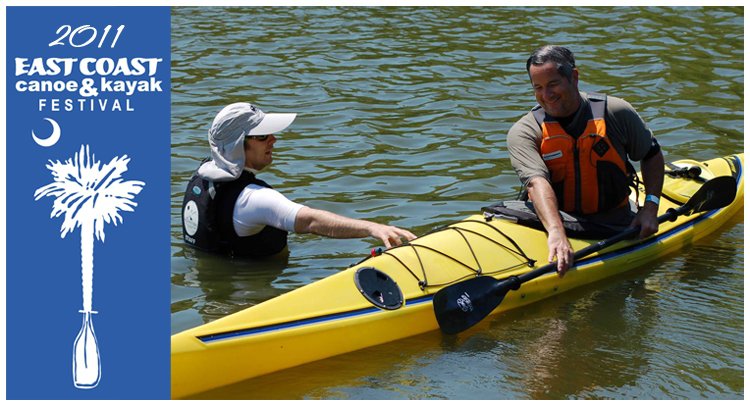
The first useful lesson may be how to sit comfortably, how to stop, or how to say that something feels wrong. Skill grows more readily when a child can ask a question without feeling that the whole fleet is waiting.
A note on power and torso rotation
Forward paddling uses the body, not just the arms. In an appropriately fitted kayak, comfortable torso rotation and coordinated leg pressure help transfer force through the paddle. Turn within a comfortable range, keep the grip relaxed, and let the shoulders move with the torso. Do not force a twist through the lower back or lock the elbows straight.
For children, begin with short, relaxed strokes and good boat control. Introduce rotation through a simple demonstration once posture and balance are comfortable. A Greenland paddle, an unfeathered kayak paddle, a feathered paddle, and a canoe paddle do not all require the same hand action.
The University of Maine’s Outdoor Leadership Curriculum Project describes torso rotation as part of the kayak forward stroke. This explanation is not presented as Derek Hutchinson’s exact wording; a primary passage and page reference for that attribution remain unconfirmed.
Wave Rodeo: keeping the historical record
Historical reference only. This section is not a ninth game or a set of instructions to recreate.
The original handout includes Riding the Waves or Wave Rodeo. It proposes following a motorboat’s wake and increasing the challenge until paddlers capsize. Its stated purpose was to develop balance, boat control, and confidence in waves.
I believe an older teaching practice deserves to be examined rather than quietly erased. The useful question is what it was trying to teach, what hazards it introduced, and how we would make a better decision today.
The handout is undated. It records an older teaching approach, rather than an official safety standard. We cannot establish from this copy when the exercise originated or how widely it was accepted. Comparing it with current guidance helps us examine how teaching decisions should respond to better understanding of risk.
What the Coast Guard teaches today
- Propeller awareness: The Coast Guard’s propeller safety brochure stresses accounting for people, keeping watch around the propeller area, and never allowing boarding or exiting from the water while engines are running or idling.
- People in the water: The Coast Guard’s Boater’s Guide to the Federal Requirements for Recreational Boats advises shutting engines off when approaching swimmers and identifies shutting engines off as the safest course when people are in the water near the boat.
- Exhaust exposure: The Coast Guard’s carbon monoxide guidance says to keep people away from exhaust outlets and warns against occupying the back deck or swim platform while engines run. Wake paddling and teak surfing are different activities; the relevant shared concern is exposure near an operating vessel’s stern.
- Life jackets: Current Coast Guard guidance recommends wearing an approved life jacket while underway, with the correct size, fit, and suitability for the user and activity.
These sources describe the hazards; they do not provide a Coast Guard approved Wave Rodeo protocol. Nor does a fixed distance behind a motorboat establish safety for a children’s activity.
What I carry forward
The teaching aim still has value: help paddlers understand moving water without making fear the instructor. For this children’s resource, I keep games in sheltered water. Wave skills belong in a separate, deliberately planned lesson with suitable participants, qualified instruction, appropriate conditions, and dedicated rescue arrangements. Deliberate capsizing beside an operating motorboat is not part of these games.
Historical comparison should preserve both the lesson and the evidence. Respect for an earlier teacher does not require treating every old exercise as present practice. An old handout is a starting point for judgment, not the end of it.
Sources and teaching notes
- Original activity material: CanoeKids Activities, an undated handout supplied by Jeff Fabiszewski, who recalls receiving it from Derek Hutchinson during their ECCKF class. Original authorship and publication date are unconfirmed. The games on this page are rewritten teaching adaptations; the original scan is not reproduced here.
- U.S. Coast Guard: Understand the Danger of Propeller Strikes, brochure marked 2015.
- U.S. Coast Guard: A Boater’s Guide to the Federal Requirements for Recreational Boats, revised November 2023, engine and propeller safety guidance.
- U.S. Coast Guard Boating Safety: Carbon Monoxide Protection; Life Jacket Wear; Float Plan. Guidance reviewed November 9, 2026.
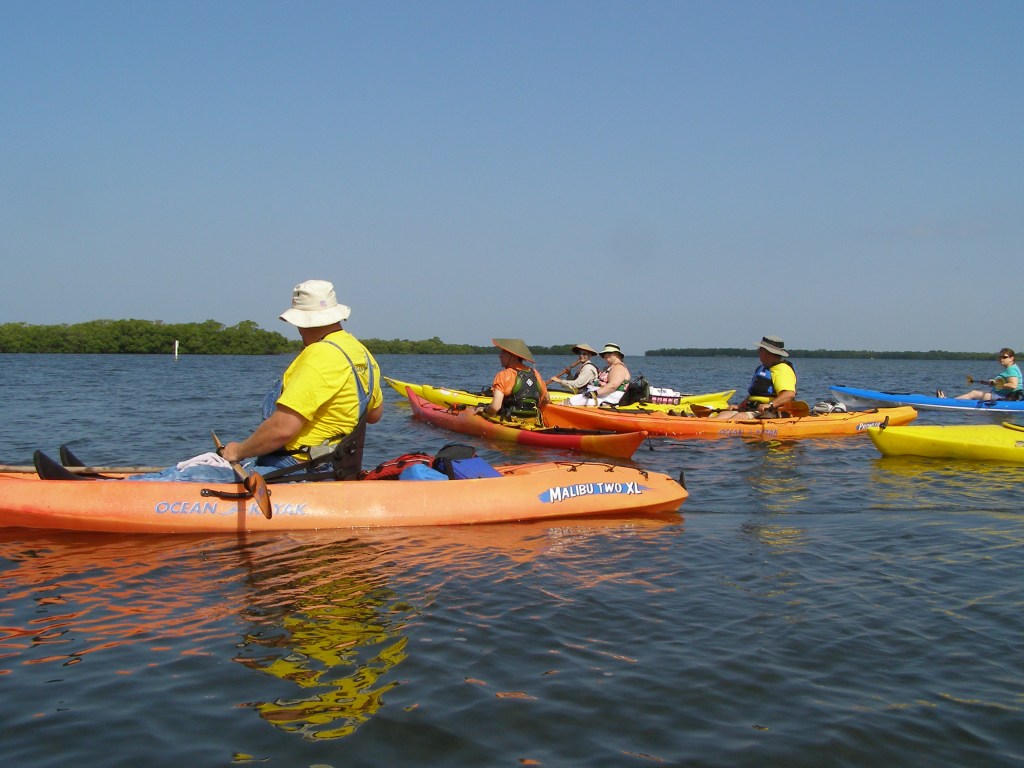
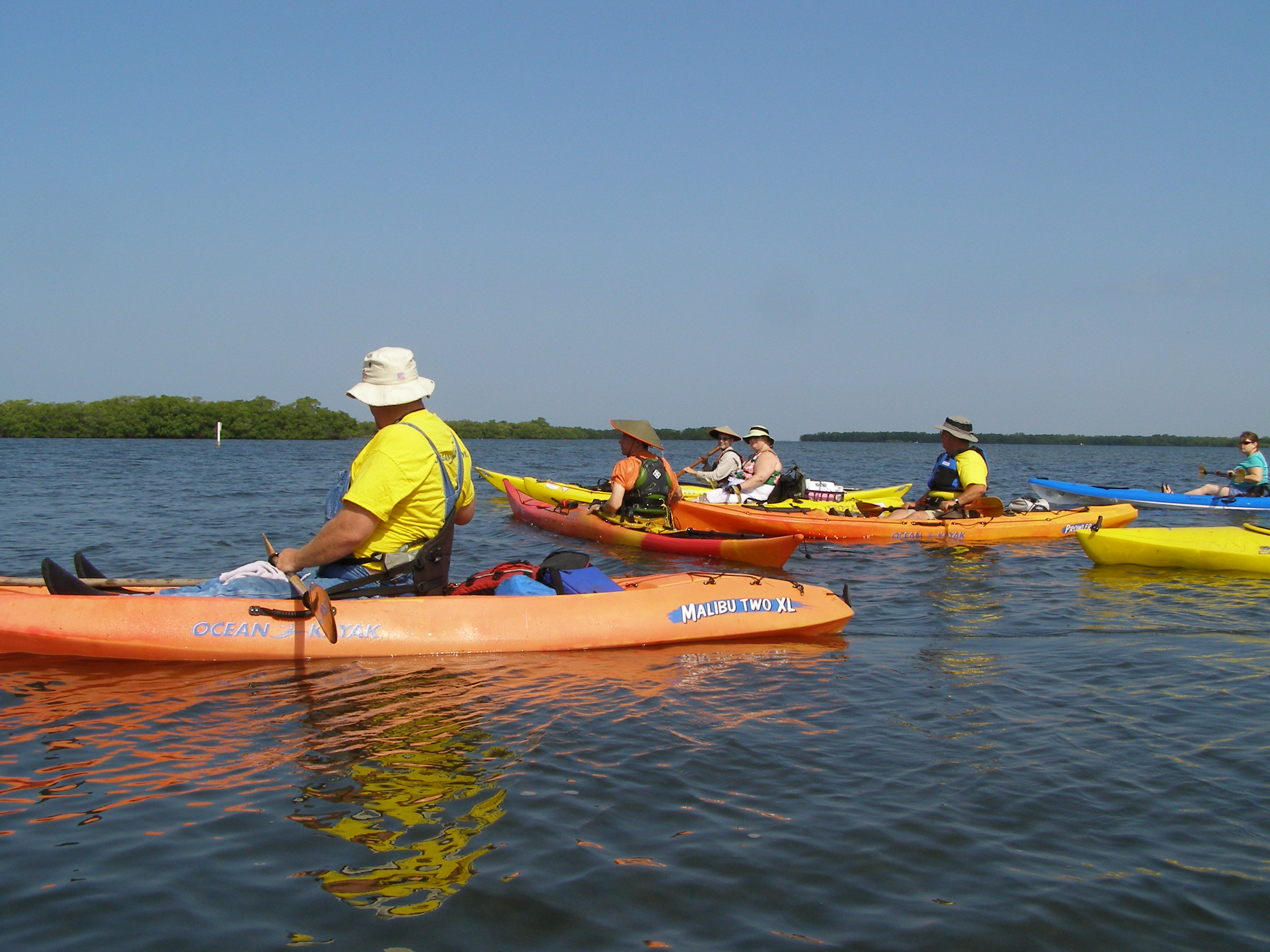
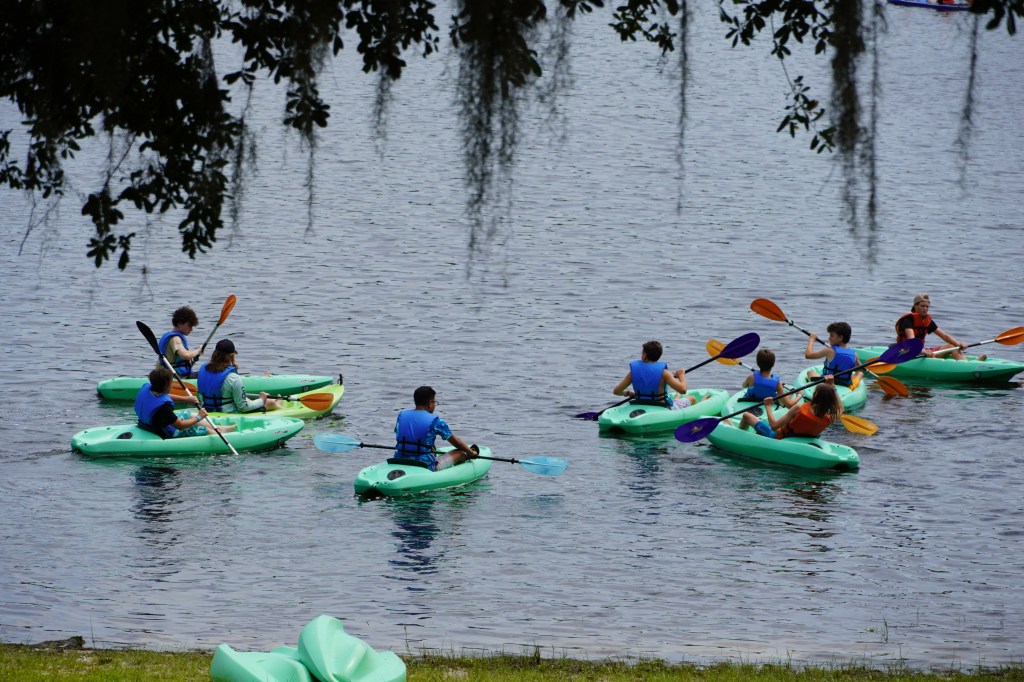
Photographs come from the Liquid Rhythm Kayaking album and illustrate the broader paddling and teaching setting. They are temporary selections and are not demonstrations of these games.
Bring curiosity. Leave with a skill.
Choose one game, make room for questions, and finish while the children still want another turn.
Keep learning together
Taking Visiting Family Kayaking in Tampa Bay helps you plan around the least experienced paddler. Fun on the Water explores other ways to enjoy paddling. For lessons and further reading, visit the instruction guide and Field Reference Library.

